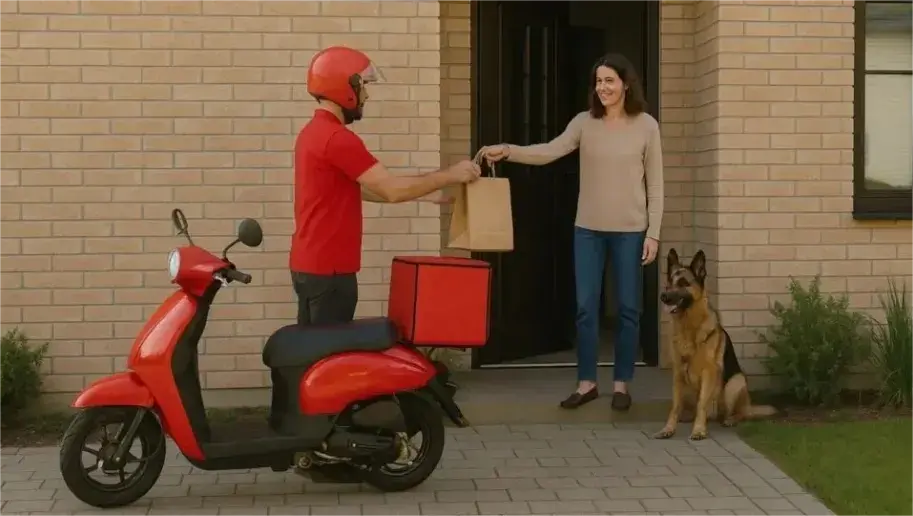
When #petfood at home is running low, or a cat suddenly loses interest in old toys, more and more European and American #petowners are grabbing their phones to place orders instead of going to physical stores. In just a dozen minutes, the products they need are delivered to their doorsteps. This new consumption model, combining convenience and high-quality service, is completely changing the face of the European and American #petmarket.
According to data from Euromonitor International, among 46% of pet-owning households in Europe, 86% of owners shop online—far higher than the 60% before the pandemic. Additionally, millennials make up one-third of pet owners, and convenience is their top priority.
In this article, we’ll bring you in-depth insights into Europe’s pet delivery market, featuring well-known delivery platforms such as Foodora, Glovo, and Just Eat Takeaway.
1. Europe’s Explosively Growing Pet Delivery Market
Authoritative data shows that Europe’s pet delivery market is experiencing unprecedented growth. Driven by rising pet ownership, consumption upgrades, and on-demand needs, major delivery platforms are reshaping the retail landscape of #petproducts with convenience and high-quality services, ensuring “fur babies” get rapid responses to their needs like never before.
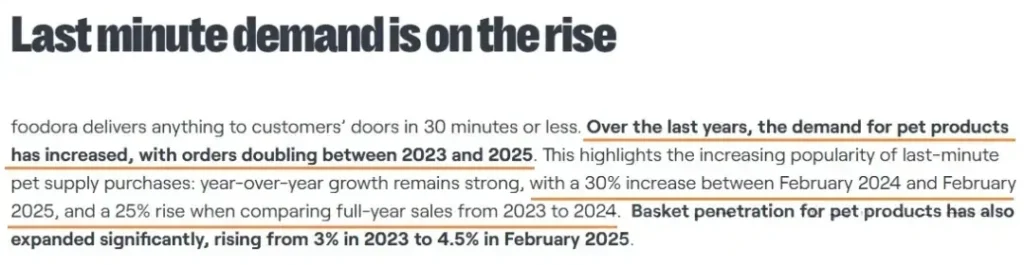
Data image: Business data released by Foodora
Examples include:
Foodora: A quick commerce (Q-commerce) and delivery company operating in six European countries (Sweden, Norway, Finland, Hungary, Austria, and the Czech Republic) reports that pet product orders have doubled over the past three years. From February 2024 to February 2025 alone, orders rose 30% year-on-year, following a 25% growth rate in the previous year.
Glovo: A multi-category delivery platform based in Spain, with operations across Europe, Central Asia, and Africa, has seen even faster growth. In July 2025, its pet product sales surged 70% year-on-year, and the number of partner #petretailers jumped from over 30 to more than 100.

Data image: Business data released by Glovo
This growth wave is not an isolated case but a microcosm of the global pet economy’s rise. According to data from FEDIAF (the European Pet Food Industry Federation), the number of pets in Europe increased from 290 million in 2017 to over 299 million in 2023. Among them, the number of cats surpassed dogs for the first time, reaching 108 million. The “cat economy” is reshaping market demand patterns. As fertility rates decline, pets play an increasingly important role in families—becoming indispensable members for many—driving up related spending.
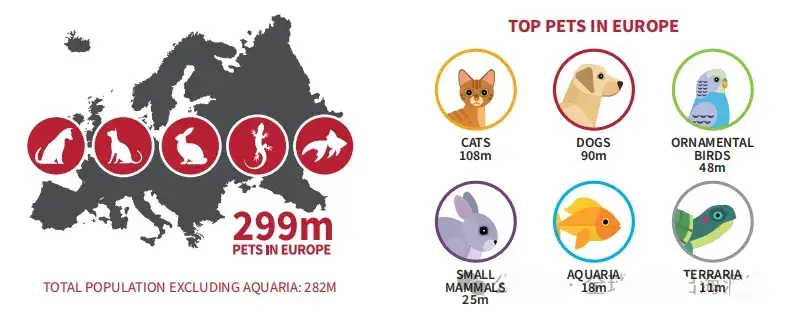
Data image: European pet data released by FEDIAF
2. Driven by Both Emotional Needs and Convenience
The boom in pet product delivery is no accident—it’s the result of lifestyle changes and consumption concept upgrades, with clear demand logic behind it.
a. Deepened Emotional Bonds as the Foundation of Consumption Expansion
With declining fertility rates and a growing number of single-person households, pets have evolved from “companions” to “family members.” 66% of pet owners regard their pets as close relational members. This trend of “anthropomorphic pet parenting” has directly driven spending upgrades.
A survey by Just Eat Takeaway, a global leading online food delivery platform, reveals the deep-seated reason for the booming pet delivery service: 65% of pet owners feel guilty when their “loved pets lack their favorite food in an emergency.” This emotion has transformed into a rigid demand for on-demand delivery.
Over the past year, the platform has delivered 1.8 million pet product orders, helping pet owners around the world maintain balance.

Data image: Survey and business data released by Just Eat Takeaway
b. Simultaneous Advancement of High-End Consumption and Category Diversification
From the best-selling lists of various platforms, besides basic food, demand for wet food, premium food, #petaccessories, soothing products, and specialty snacks has grown significantly. Pet owners are no longer satisfied with providing basic care but pursue their pets’ quality of life and emotional satisfaction.
In the consumption wave of “everything on-demand,” pet products are naturally included. For example, the increase in pet product basket penetration on Foodora from 3% to 4.5% further proves that this consumption habit is taking shape.
3. Platform Strategies: From Occasional Consumption to Habit Formation
The quick commerce sector in the #petindustry is growing strongly, and the popularization of on-demand needs has opened up space for delivery services. Faced with booming demand, delivery platforms are seizing the market through differentiated service strategies, turning the promise of “convenience” and “quality” into actual competitiveness.
a. Timeliness and Product Categories as Basic Thresholds
Glovo has launched a 30-minute delivery service in cooperation with Arcaplanet, Italy’s omnichannel #petretailer, taking “on-demand delivery” and “maximizing order categories” as core strategies. The surge in the number of partner retailers is a direct reflection of category expansion. This strategy has yielded significant returns:
Over the past year, Glovo’s global #petcategory sales grew by 103%, including 146% growth in retail sales and 85% growth in groceries.
Customer loyalty is also high—80% of first-time customers return, making an average of 2.4 purchases per month. The high repurchase rate confirms the sticky value of the service.
b. Omnichannel and Brand Cooperation to Expand Service Depth
Just Eat Takeaway actively expands its own brand product line—4 of its top 10 global best-selling products are from retailer brands—and implements an omnichannel strategy to integrate platform and physical retailer resources.
Foodora focuses on affordability and cooperation with regional brands. In recent months, partnerships between the platform and brands have increased significantly. These collaborations not only serve the European market but also extend to multiple consumer markets such as Canada and Mexico, showing its ambition for global expansion.
By enhancing user binding through subscription services, Foodora’s Foodora PRO membership program makes frequent shopping more cost-effective, driving repurchase rates above 60% in some markets.
4. Popular Products and Core Markets Reveal Consumption Trends
Although the best-selling products reported by various platforms vary slightly, the overall trend is highly consistent across borders. Geographically, core markets for pet delivery services are concentrated in capitals and major city centers.
- Just Eat Takeaway: The top five most popular products include dry dog food, dry cat food, wet cat food, #petcare and hygiene products, and wet dog food. Top-performing cities cover European cities such as Coventry, Dublin, Wolverhampton, and Telford, as well as North American cities like Winnipeg, Canada.
- Foodora: Best-sellers include canned food, accessories, comfort products, snacks, and grooming supplies. The biggest buyers are in Central and Northern European hubs such as Budapest, Vienna, Prague, Stockholm, and Gothenburg.
- Glovo: Top-selling products include hygiene products, premium pet food, snacks, and toys. Major consumption locations are Southern European cities such as Madrid, Bucharest, Barcelona, Lisbon, and Zagreb.
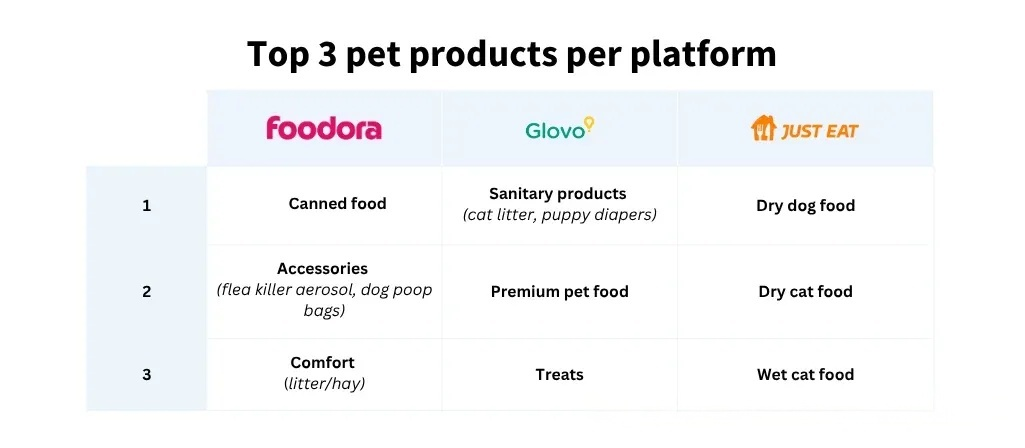
Data image: TOP 3 best-selling pet products on various platforms
More notably, emerging markets are booming—for example, orders in Rome increased 1000% year-on-year, and Warsaw saw a 280% growth—showing huge potential in second-tier cities.
5. Final Thoughts: Cold Reflections Behind Growth
Major delivery platforms predict that pet product delivery services will continue to grow in the future, and convenience is one of the most critical drivers of consumer loyalty.
However, as the market matures, platforms face challenges in maintaining growth. Increased competition, inflation, and other financial headwinds may test their capabilities. How to maintain service quality while scaling up and ensuring delivery speed while expanding product categories will be the key to success.
The rise of pet delivery services reflects both the penetration of the digital economy and changes in the relationship between humans and pets in modern society. When pets become emotional anchors for families, providing them with on-demand, high-quality services has formed an irreversible consumption trend. In this context, “minute-level” pet product delivery is not just a business innovation but a deep response to the emotional needs of modern people.