

Let’s be real—#dogowners have it the hardest in winter.
No matter the wind, snow, or cold snaps, you have to stick to your morning and evening dog walks without fail. After all, your furry friend’s bathroom needs can’t wait.
Even though you’re shivering and dreading going outside, dogs are still excited about heading out to play. As soon as they see a lawn, open space, or other pups, they’ll start running around and playing like crazy.

But low temperatures are a fact. Even if your dog doesn’t seem to feel cold or doesn’t show it, you must take necessary cold protection measures in advance. If they catch a cold, get diarrhea, or even suffer from frostbite, it’ll be too late to regret it.
Now, let’s take a look at the types of dogs that need extra care, common cold protection mistakes, and scientific, effective ways to keep them warm~

Which dogs need extra warmth?
1. Dog Breeds That Are Naturally Prone to Cold
Whether a dog feels cold depends mainly on its size and coat density.
Small dogs like Chihuahuas and Yorkshire Terriers need priority warmth. Their body surface area to weight ratio is higher than that of large dogs, so they lose heat twice as fast. Extra protection is a must in winter.
In addition, hairless and short-haired dogs also require special attention. Breeds like Hairless Terriers have no fur to cover their skin, which is directly exposed to cold air. They must wear warm clothing when temperatures drop below 10℃.
Short-haired dogs such as Dobermans and Labradors may have fur, but their coat is thin and lacks down for insulation. When going out in winter, their abdomen and other areas are prone to getting cold, which can cause gastrointestinal discomfort.
2. High-Risk Groups with Weak Immunity
Puppies and senior dogs are the top priorities for warmth.
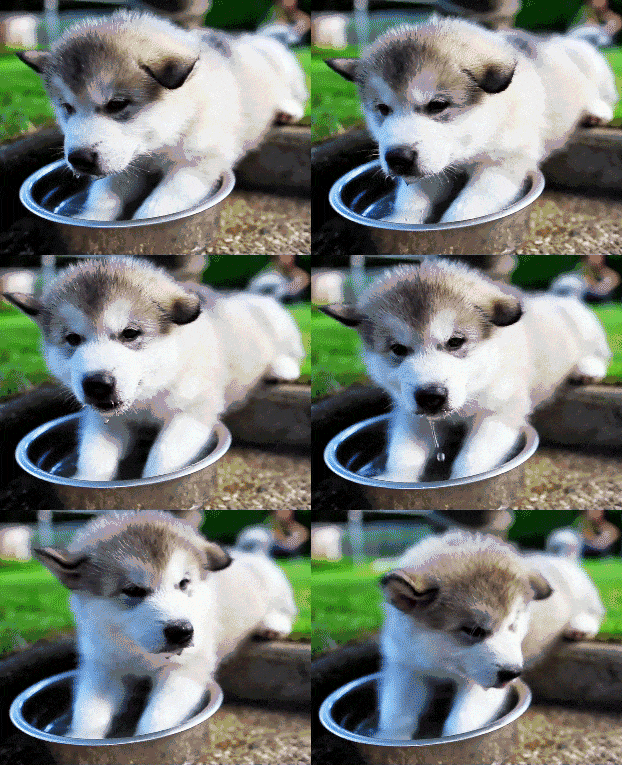
Puppies’ temperature regulation systems are not fully developed. They have little subcutaneous fat and poor heat storage capacity, making them prone to hypothermia in low temperatures.
Senior dogs have a slower metabolism and weakened immunity. Most also suffer from joint problems or chronic illnesses. Cold weather can worsen joint pain and increase the risk of colds and bronchitis. Therefore, it’s important to keep their living environment at a stable temperature in winter, avoiding sudden changes between hot and cold.
Common Cold Protection Mistakes
1. Ignoring Clothing Suitability
Many #petowners think putting a piece of clothing on their dog is enough, but they overlook the material, size, and usage scenario of the clothing, turning warmth into torture for the dog.
For example, some choose clothes based solely on appearance and ignore the size. Ill-fitting, tight clothes can restrict the dog’s movement, or even press on the chest and affect breathing.
It’s also important to add or remove clothes in time. If the room has heating or air conditioning, wearing thick clothes will make the dog overheated, leading to heat stress reactions like panting or lethargy.
2. Overlooking Hidden Risks in Details
Letting your dog stay near air conditioning vents or electric heaters can easily lead to accidental injuries. The hot air from heating vents is too hot—prolonged direct exposure can dry out the dog’s skin, cause peeling, or even burn the hair roots.
There’s also a hidden risk: the side of the dog close to the heat source will be too hot, while the other side is still exposed to cold air. Alternating between hot and cold makes them more likely to catch a cold.
Practical Methods for Scientific Warmth
1. Indoor Warmth
First, choose the right location for the dog’s bed—away from windows, door gaps, or other places with drafts.
The material of the #dogbed also matters. Short-haired and hairless dogs are suitable for semi-enclosed beds, which can wrap their bodies and reduce heat loss. Long-haired dogs can use open cotton pad beds to avoid overheating.
If you use air conditioning or heating indoors, it’s recommended to use a humidifier for your dog. Keep the humidity at a comfortable level to prevent skin discomfort caused by dry air.
2. Outdoor Warmth
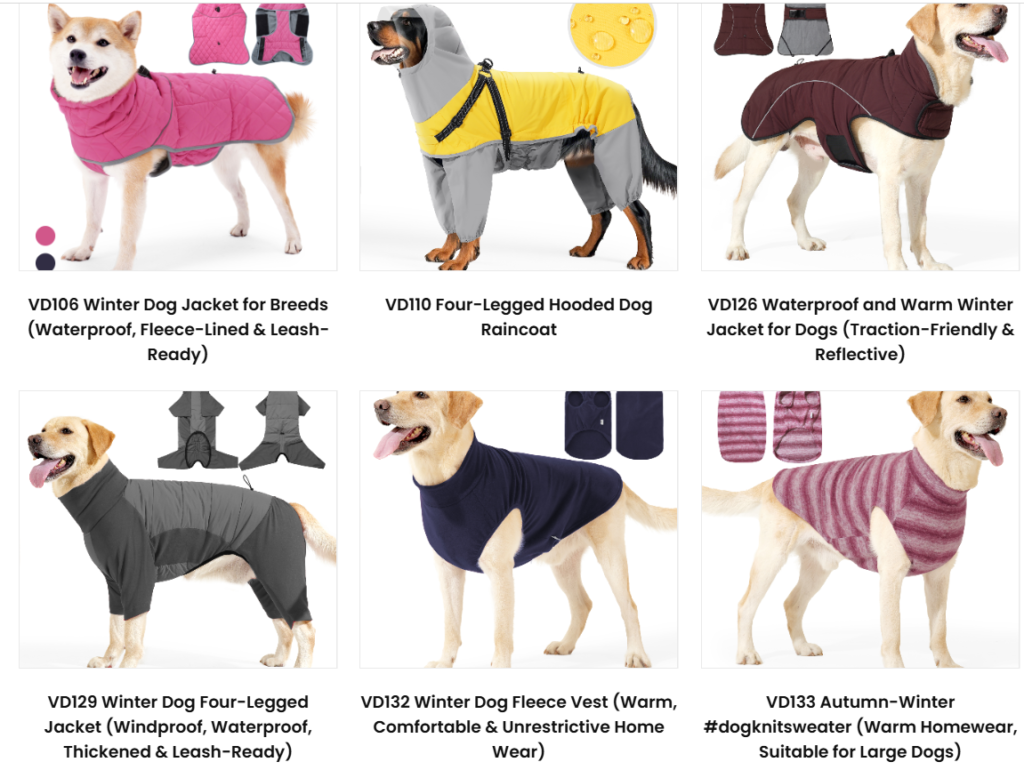
The key to keeping dogs warm outdoors in winter is to protect key areas and ensure windproof and waterproof protection.
The clothing should fit properly—neither too tight nor loose enough to fall off when the dog moves. After putting it on, check the dog’s walking posture to make sure it doesn’t affect running or defecation.
In winter, the ground may have snow, ice pellets, or de-icing salt. Direct contact can frostbite the dog’s paw pads or irritate the skin, causing redness and swelling. So paw pad protection is essential.
When going out, you can put waterproof #petshoes on your dog. After returning home, immediately wash the paw pads with warm water, dry them thoroughly, and check for wounds or redness.
To help your dog stay warm and comfortable during winter walks, we’ve prepared a catalog of high-quality #petclothing—including windproof, waterproof, and warm styles suitable for different breeds and sizes.
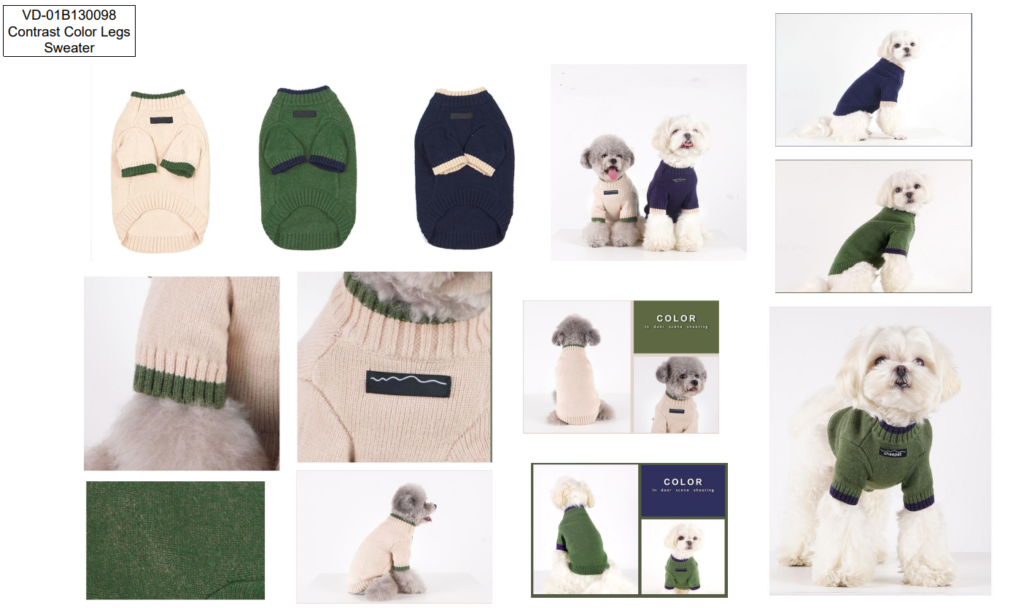
Click to browse the catalog and find the perfect winter outfit for your furry friend!