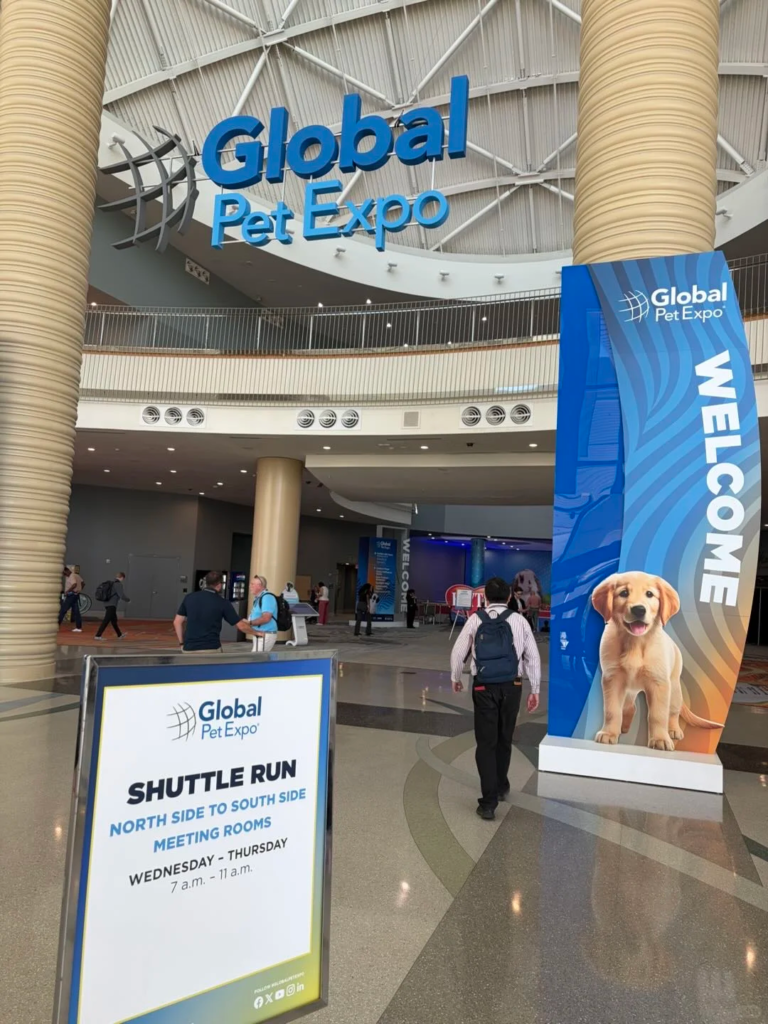
If your current strategy still revolves around “low price” and “mass distribution,” the reality is clear: that approach is quickly losing relevance in today’s US #petmarket.
The industry is now moving into a phase defined by three converging forces:
- Premiumization
- Functional innovation
- Brand-driven differentiation
These shifts are not isolated — they are happening simultaneously, reshaping how products are developed, marketed, and sold.
Below are the most critical trends observed from the latest 2026 Global Pet Expo.
Functional Pet Products Are Becoming the New Standard
Basic #petproducts are no longer enough.
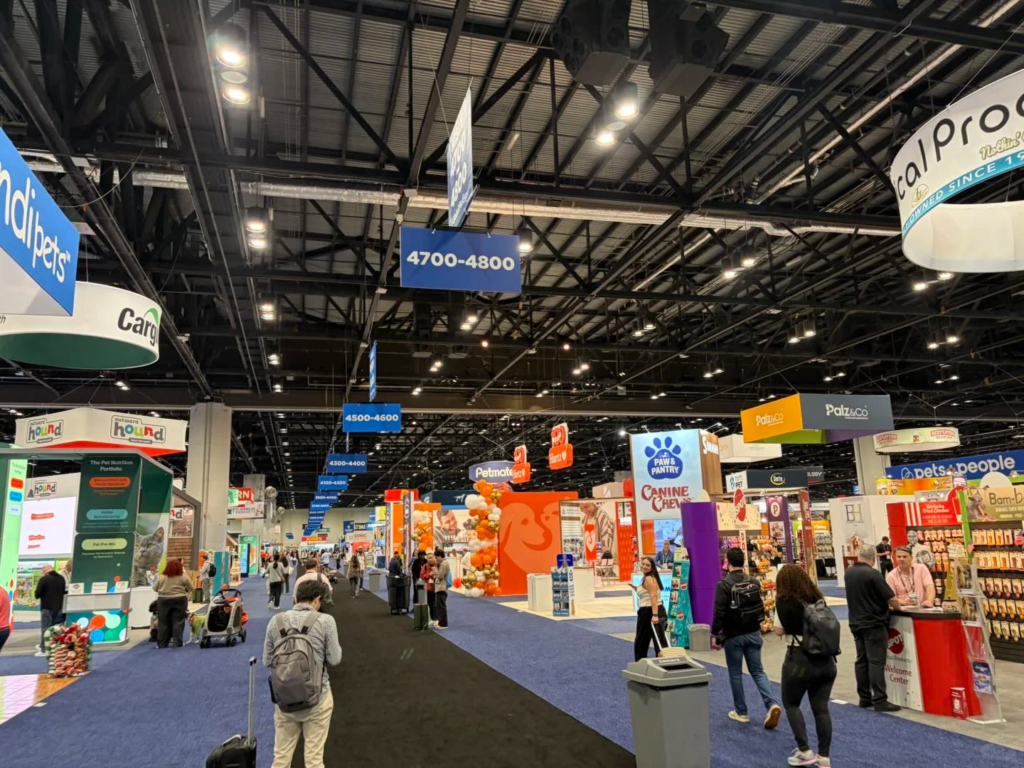
Demand is rapidly shifting toward functional solutions, particularly in areas such as:
- Gut health
- Calming and anxiety relief
This reflects a deeper transformation:
👉 Pet products are increasingly moving toward a “human-grade health” model, where scientific formulation and effectiveness are becoming the barrier to entry.
For brands, this creates immediate pressure:
- Products must deliver measurable value
- Claims must be credible and easy to understand
Emotional Consumption Is Driving Product Demand
Products like lick mats and interactive toys are seeing strong traction.
But the real driver is not the product itself — it’s the emotional outcome.
👉 #Petowners are no longer just buying items; they are investing in ways to reduce stress, improve bonding, and enhance daily interaction.
This shift reinforces a key reality:
- Pets are treated as family members
- Purchase decisions are increasingly emotion-led
Sustainability and Transparency Are Now Entry-Level Requirements
Eco-friendly materials and clean labeling are no longer differentiators — they are expectations.
Key elements becoming standard include:
- rPET packaging
- Transparent ingredient sourcing
👉 Without these, brands may struggle to access major retail channels.
This creates operational pressure on brands to:
- Upgrade materials
- Improve supply chain transparency
- Align with sustainability standards
Packaging Has Become a Core Sales Driver
One of the most visible patterns at the expo:
Products that perform well are those that communicate instantly.
👉 Within 3 seconds, customers must understand:
- What the product does
- Why it matters
This means packaging is no longer just protective — it is a critical conversion tool.
Brands that fail here face a clear problem:
- Even good products struggle to sell
Channel Strategy Is Becoming More Defined
The role of each channel is now more structured:
- Online channels → focused on cash flow and survival
- Offline retail → focused on brand positioning and premium pricing
👉 Entering a channel is no longer the challenge — selling through is.
Many brands face:
- Overstocked shelves
- Low SKU turnover
This forces companies to rethink:
- Product selection
- Channel alignment
- Sell-through strategy
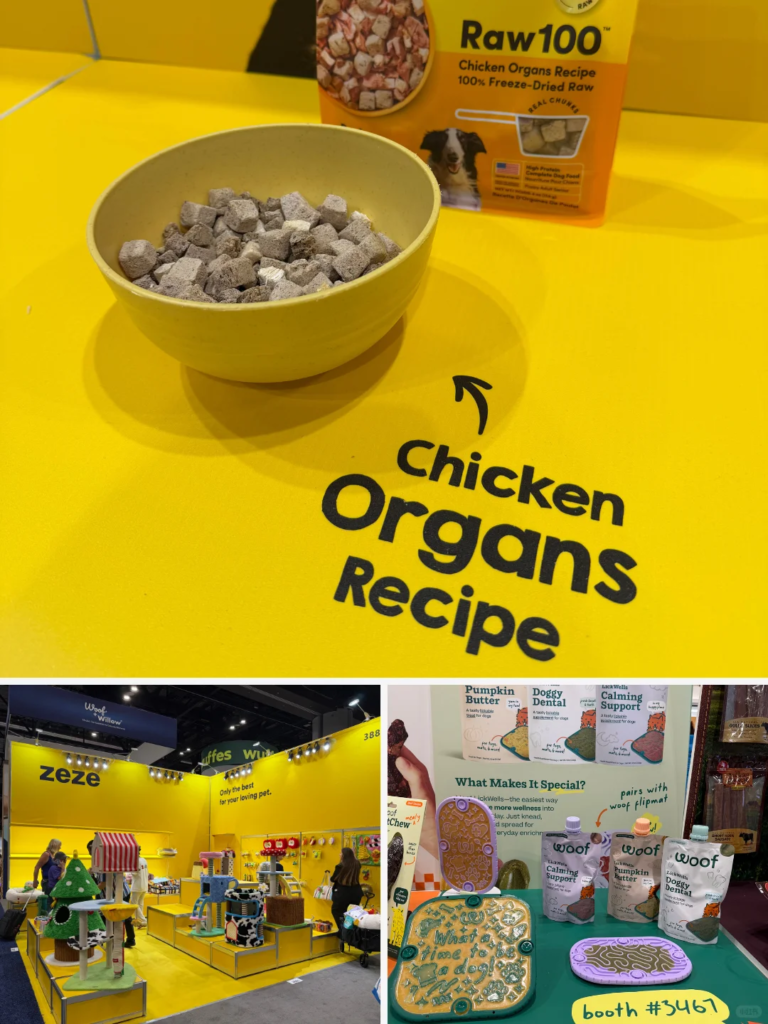
Pet Food Is Fully “Humanized”
The evolution of #petfood is one of the most obvious transformations.
Key trends include:
- Grain-free formulations
- High-protein recipes
- Human-grade ingredients
- Fresh and freeze-dried formats
👉 The shift is clear:
Pet food is no longer just nutrition — it combines health, lifestyle, and emotional value.
Freeze-Dried and Mixed Feeding Are Accelerating
A strong trend across the expo:
- Freeze-dried products
- Toppers
- Mixed feeding solutions
Consumers are now actively customizing meals for their pets, similar to human dietary trends like:
- Fitness meals
- Light eating plans
👉 This creates demand for more flexible product formats and SKUs.
Treats Are Highly Competitive — and Saturated
The treat category stands out for one reason:
👉 Extremely high competition.
Observations include:
- A large number of small brands entering the space
- Low entry barriers
- Strong marketing flexibility
However, this leads to a clear issue:
- Severe product homogenization
Brands in this segment are under pressure to differentiate beyond product alone.
Functional and Tech-Driven Products Are Expanding
The market is rapidly moving beyond basic needs.
Emerging product directions include:
- Anxiety relief solutions
- Digestive health products
- Skin and coat care
- Smart devices and AI-driven monitoring
👉 The industry is gradually shifting toward:
- Medicalization
- Technology integration
This raises the bar for innovation and product development.
Product Differentiation Is Shrinking — Brand Power Is Growing
A consistent pattern across successful brands:
👉 Products may be similar, but positioning is not.
Winning brands share one key ability:
- Clearly communicate why they exist
This indicates a major shift:
- The industry is becoming content-driven
- Competitive advantage is moving from product to perception
DTC and Content Are Now Standard Strategy
The consumer journey has become highly predictable:
- Discovery → TikTok / Instagram
- Conversion → Amazon / brand website
👉 This means brands must:
- Invest in content
- Control their direct-to-conser channels
Without this, customer acquisition becomes increasingly difficult.
The Industry Is Becoming Relationship-Driven
At its core, the #petindustry is no longer just transactional.
It is evolving into a relationship-based business centered on:
- The bond between pets and owners
- The connection between brands and consumers
👉 Long-term success depends on one capability:
Building and maintaining meaningful relationships.
✅ 2️⃣ What This Means for the Pet Industry
The pet industry is undergoing a structural transformation driven by:
- Emotional consumption
- Functional demand
- Brand differentiation
Key implications:
- Product innovation alone is no longer sufficient
- Scientific credibility and emotional value are both required
- Market competition is shifting from price to positioning
At the same time:
- Entry barriers are rising in terms of branding, formulation, and compliance
- Consumer expectations are becoming more complex and segmented
✅ 3️⃣ What This Means for Pet Brands Working with OEM Partners
The Problem
Brands are facing increasing pressure from multiple directions:
- Higher expectations for product functionality
- Faster trend cycles driven by social media
- Stronger competition with similar products
- Demand for sustainable and compliant materials
At the same time, margins are under pressure, and inventory risks are rising.
The Need
To stay competitive, brands need:
- Faster product development cycles
- More flexible SKU strategies (especially for trends like freeze-dried or functional products)
- Reliable quality for health-related positioning
- Better cost control despite premium positioning
Where OEM Partners Create Value
A capable OEM partner can directly support these needs by providing:
- Flexible production for small-batch and trend-driven products
- Fast sampling and development to match market speed
- Stable quality control for functional and premium positioning
- Scalable manufacturing to support both DTC and retail channels
👉 In a market where trends shift quickly and differentiation is harder, OEM partners become a key part of a brand’s competitive strategy — not just a supplier.