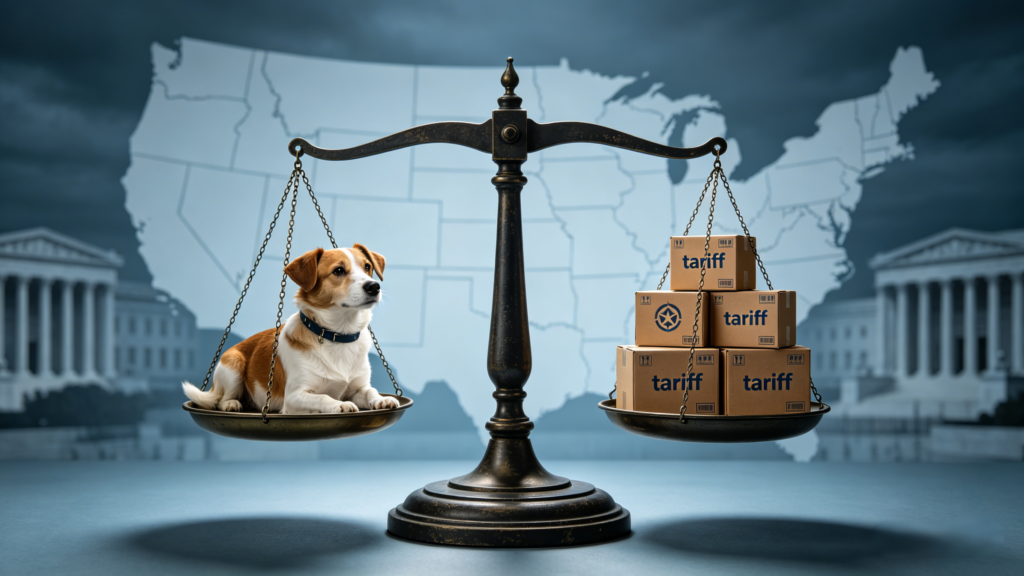
Recent developments in US trade policy are creating new layers of uncertainty for #petcompanies already facing rising costs.
On February 20, the US Supreme Court issued a ruling on tariffs imposed under the International Emergency Economic Powers Act (IEEPA), concluding that the Act does not grant the President authority to impose tariffs.
While this decision opens the door for potential refunds, it does not immediately resolve the financial impact on companies.
Refunds Are Possible — But Not Guaranteed
Following the ruling, the US Court of International Trade (CIT) stated that importers may be eligible to claim refunds for tariffs paid under IEEPA.
However, the process remains unclear:
- The CIT will review and assess claims individually
- No confirmed timeline has been provided
- The final outcome for companies remains uncertain
👉 This creates a critical issue for brands:
Even when legal decisions appear favorable, the financial recovery process may be slow, complex, and unpredictable.
Tariff Pressure Has Already Impacted the Industry
According to the American Pet Products Association (APPA), tariff-related costs in the US #petindustry have increased by approximately 29% over the past year.
This has already placed significant pressure on:
- Cost structures
- Pricing strategies
- Profit margins
👉 For many brands, these costs have already been absorbed or passed on — making any delayed refund less impactful in the short term.
Brands Begin to Respond: The Case of BARK
Some companies are already taking action.
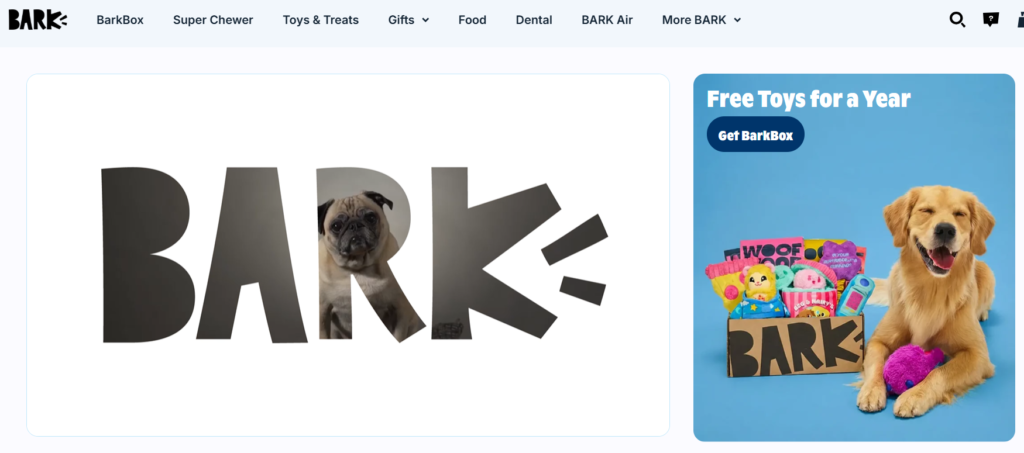
US dog brand BARK announced plans to seek refunds for tariffs paid, while acknowledging the uncertainty involved.
Key figures:
- Total tariffs paid: approximately $15.4 million
- Allocated to cost of goods sold: $10.5 million (fiscal year ending March 31, 2026)
At the same time, the company has implemented cost reduction initiatives to improve operational efficiency.
However, financial pressure remains evident:
- Revenue declined 22.1% YoY to $98.4 million
- Net loss reached $8.6 million
👉 This highlights a broader reality:
Tariff costs are not just theoretical — they directly impact profitability and business performance.
Retailers Also Facing Ongoing Cost Exposure
The impact of tariffs is not limited to brands — retailers are also under pressure.
Central Garden & Pet estimates:
- Approximately $20 million in additional tariff exposure for the fiscal year, concentrated in its pet segment
To manage this, the company is relying on:
- Pricing adjustments
- Portfolio optimization
- Supply chain strategies
Similarly, Petco has reported:
- Tariffs beginning to affect cost of goods sold
- Increasing impact expected in later quarters
👉 This indicates that tariff pressure is spreading across the entire value chain.
Industry Response: Waiting for Clarity
Industry organizations are closely monitoring the situation.
APPA has stated that many companies are actively tracking the legal process and seeking guidance.
At the same time, businesses are being advised to:
- Consult trade and compliance experts
- Prepare for a potentially complex refund process
The expectation is that:
👉 Greater policy clarity would help companies make more confident strategic decisions.
Trade Reality: Policy Changes Do Not Equal Immediate Relief
This situation reinforces a key industry insight.
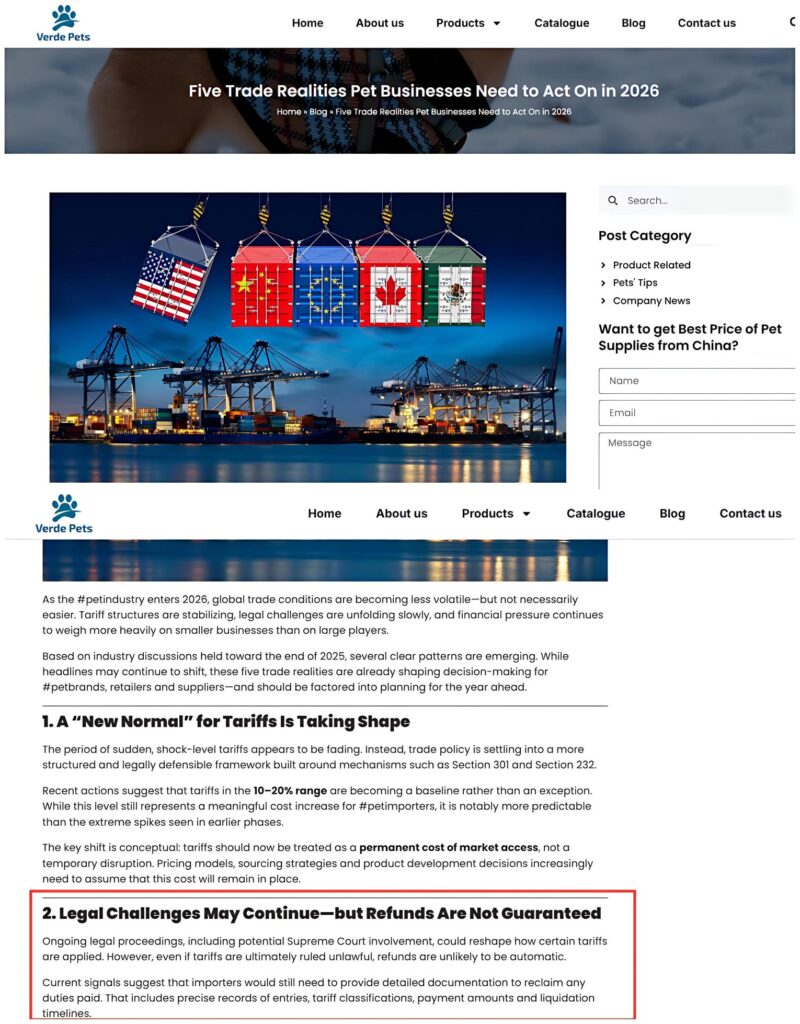
In our January blog, Five Trade Realities Pet Businesses Need to Act On in 2026, we highlighted an important point:
👉 Even if the Supreme Court overturns IEEPA tariffs, refunds will not be automatic.
The latest developments confirm this reality.
Although the ruling creates a pathway for potential recovery, companies still face:
- Uncertain timelines
- Administrative complexity
- No guaranteed financial outcome
👉 This creates a challenging operating environment:
Brands must continue managing costs without relying on immediate policy relief.
Final Insight
While the Supreme Court’s decision may reshape the legal framework around tariffs, its practical impact on pet companies will take time to materialize.
In the meantime:
- Cost pressure remains
- Cash flow impact continues
- Strategic adjustments are still required
👉 For most companies, the focus remains on what they can control — not what policy may eventually resolve.
✅ 2️⃣ What This Means for the Pet Industry
The tariff situation highlights a broader structural challenge in the pet industry:
- External factors (policy, tariffs, regulation) are increasingly unpredictable
- Cost pressures can emerge quickly and persist over time
- Financial recovery is often delayed, even when conditions improve
This reinforces the importance of:
- Risk management
- Cost visibility
- Operational flexibility
✅ 3️⃣ What This Means for Pet Brands Working with OEM Partners
The Problem
Pet brands are facing:
- Rising tariff-related costs
- Uncertain refund timelines
- Ongoing pressure on margins and pricing
At the same time:
- External policy factors are difficult to predict
- Financial planning becomes more complex
The Need
To remain stable, brands need:
- Greater control over cost structures
- Flexibility to adapt to sudden cost changes
- Faster response to market and policy shifts
- More predictable supply chain performance
Where OEM Partners Create Value
A reliable OEM partner can help brands navigate these challenges by:
- Offering cost-efficient manufacturing to offset tariff pressure
- Providing flexible production options to adjust volumes quickly
- Supporting faster lead times to reduce financial exposure
- Ensuring stable supply chains despite external disruptions
👉 In an environment where policy outcomes are uncertain, operational control becomes a key competitive advantage.
Source: GlobalPETS