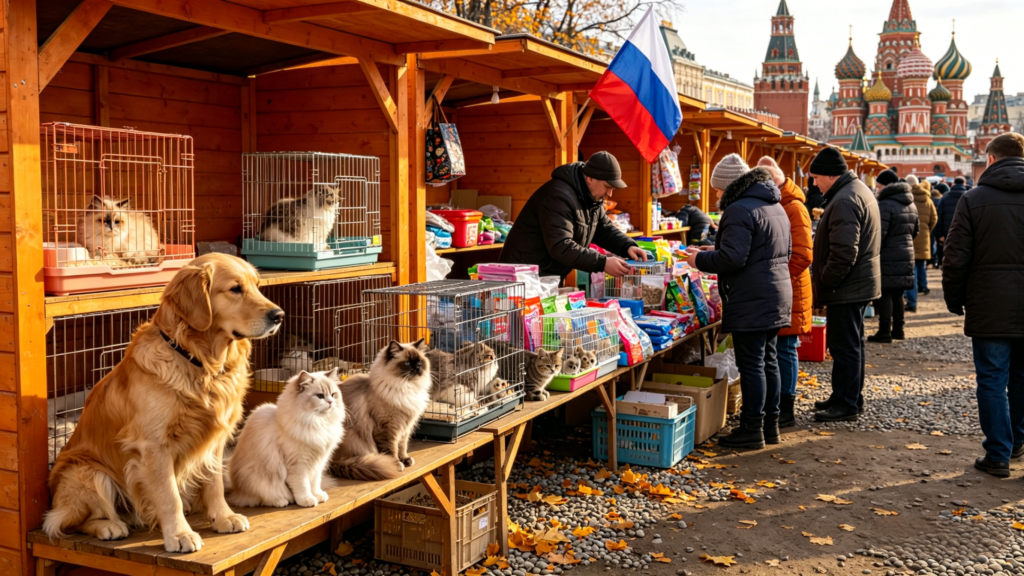
The Russian #petmarket continued to expand in 2025, but the nature of that growth is becoming more complex.
According to estimates from Zooinform, the market grew 15.8% YoY, reaching ₽590 billion ($7.6B / €6.5B). While this reflects strong momentum, it is slightly lower than the 17.7% growth recorded in 2024.
👉 This suggests a shift:
Growth remains strong in value, but real demand is becoming more constrained, and competition is intensifying.
Inflation Is Driving Most of the Growth
A key driver behind market expansion is not volume, but pricing.
In the broader FMCG sector:
- 88% of revenue growth is attributed to inflation
- Only 12% comes from real demand
The #petindustry follows a similar pattern.
👉 This creates a critical challenge for brands:
Revenue may be growing, but underlying demand is not keeping pace — making competition for repeat purchases more intense.
Pet Food Dominates — But Structure Is Shifting
#Petfood remains the core of the market:
- Accounts for approximately 83% of total #petproduct spending
Within this category:
- Cat food drives 16% annual growth
- Represents 59% of total market revenue
Meanwhile:
- Treats account for only 3.2% of the market
- But show the fastest growth at +24% YoY
👉 This reflects a familiar pattern:
Core categories provide stability, while smaller segments offer higher growth potential — especially those linked to emotional or functional value.
A Polarized Market Is Emerging
The Russian pet market is increasingly split into two distinct segments.
On one side:
- Demand for premium and super-premium products remains resilient
On the other:
- Economy products are gaining share
- More partners are requesting lower-cost production options
👉 This creates a dual-market reality:
- Value-driven consumption for everyday products
- Willingness to spend on targeted, high-value items
Value-Oriented Consumption Is Strengthening
As economic pressure increases, more #petowners are optimizing their spending.
Key signals:
- Hard discounters grew 20.2% in value and 15.4% in volume
At the same time:
- Functional products continue to gain traction
- In cat food, functional diets reached 34.9% of sales value in 2025, up from 33.3% in 2024
👉 This highlights a critical shift:
Consumers are trading down in routine purchases, but still paying for:
- Health-related benefits
- Emotional categories like treats
Sanctions Are Reshaping the Supply Chain
The Russian pet industry is now in its third year of operating under sanctions.
This has led to:
- Reduced access to imported products
- Ongoing constraints in cross-border supply chains
As a result:
- Local production increased by 9% YoY in pet food
For some companies, the impact has been dramatic:
- Private-label products now represent 60% of portfolios
- Around 20% of assortments come from newly established domestic brands
👉 This reflects a major structural shift:
From import reliance → to local manufacturing and self-sufficiency.
Production Expansion and Localization Accelerate
To reduce dependency on imports, companies are investing heavily in:
- Manufacturing capacity
- Ingredient production (flavorings, additives, hydrolysates)
Looking ahead:
- Additional capacity of 100,000–150,000 tons per year is expected if planned projects launch on time
Companies like LIMKORM are:
- Launching new wet food production in 2026
- Planning new dry food facilities
Long-term forecast:
- Dry pet food production expected to grow from 800,000 tons to over 1,100,000 tons within 10 years (+40% growth)
👉 This indicates a clear direction:
Supply chain localization is becoming a strategic priority.
Channel Structure Is Also Evolving
Sales channels are shifting alongside market changes.
In 2025:
- Grocery and non-specialized retail: 56.2% of sales
- Specialized #petstores: 19.3% (down from 20%)
- Online: 23.3% (up from 21.8%)
👉 Online channels continue to gain share, while traditional #petretail sees slight decline.
Outlook: Continued Growth with Structural Changes
The Russian pet market is expected to grow 10%–13% in 2026, though at a more moderate pace.
High-growth categories include:
- Treats
- Functional nutrition
- Health-oriented products
- Well-being solutions
👉 The direction is clear:
Growth will continue, but competition will intensify — especially as product differentiation becomes more difficult.
✅ 2️⃣ What This Means for the Pet Industry
The Russian pet market reflects several broader industry trends:
- Inflation-driven growth is masking weaker real demand
- Market polarization between economy and premium segments is increasing
- Supply chain disruptions are accelerating localization
At the same time:
- Functional and health-oriented products continue to gain share
- Emotional and value-driven consumption coexist
👉 This creates a more complex competitive landscape where brands must operate across multiple price and value segments.
✅ 3️⃣ What This Means for Pet Brands Working with OEM Partners
The Problem
Brands are facing:
- Slower real demand despite revenue growth
- Stronger competition in both premium and economy segments
- Supply chain constraints due to geopolitical factors
- Increasing pressure to balance cost and value
The Need
To stay competitive, brands need:
- Flexible production to serve both economy and premium segments
- Faster product adaptation to shifting demand
- Reliable supply chains despite external disruptions
- Cost control without compromising functional value
Where OEM Partners Create Value
An experienced OEM partner can support brands by:
- Offering scalable production across multiple price tiers
- Enabling quick development of functional and value-driven products
- Supporting localization strategies through diversified supply chains
- Providing stable production capacity under uncertain conditions
👉 In a polarized market, flexibility in production and positioning becomes a key competitive advantage.
Source: GlobalPETS