
01
Market Fundamentals: Opportunities Behind the Numbers
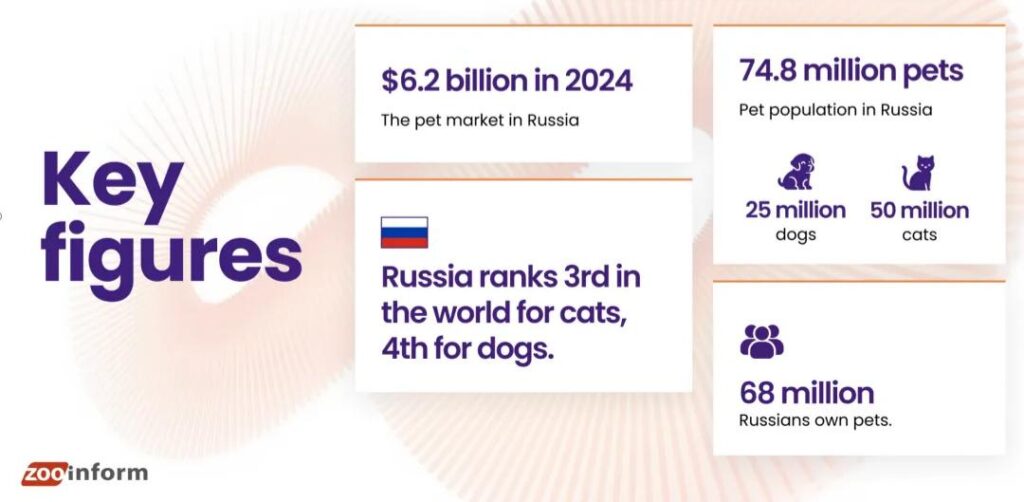
The Russian #petmarket has reached a size of RUB 510 billion (approximately $6.2 billion).
What stands out even more is the massive #petpopulation:
- 50 million cats, ranking third globally
- 25 million dogs, ranking fourth globally
- A total of 78 million pets
The strong emotional attachment Russian consumers have toward their pets provides a solid foundation for continued market growth.
From a structural perspective:
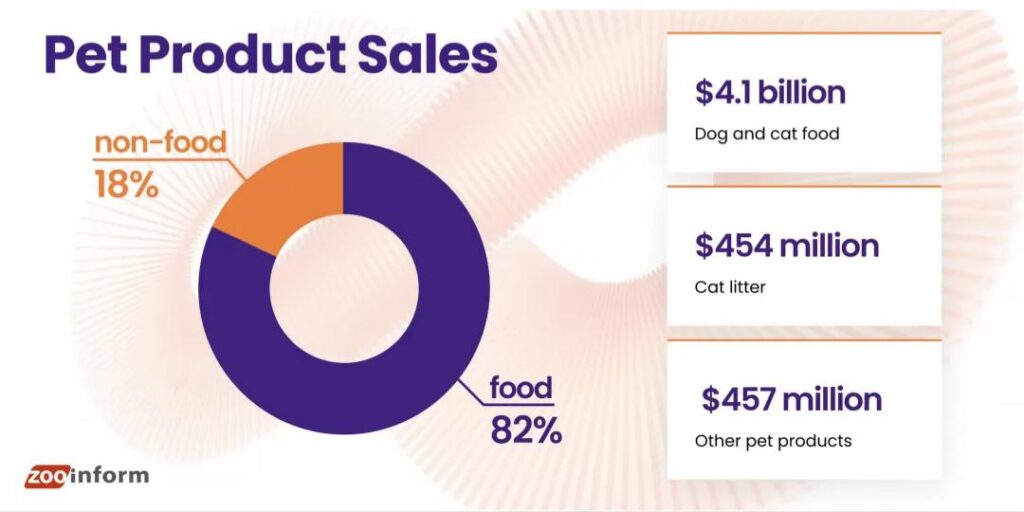
- Pet staple food (such as dog and cat food) accounts for 82% of the market (approximately $4.1 billion), serving as the core pillar
- Non-food products account for 18%, with cat litter alone contributing nearly half (approximately $0.5 billion)
02
Market Transformation: From Import Dependence to Local Growth
Over the past three years, the Russian pet market has undergone significant changes.
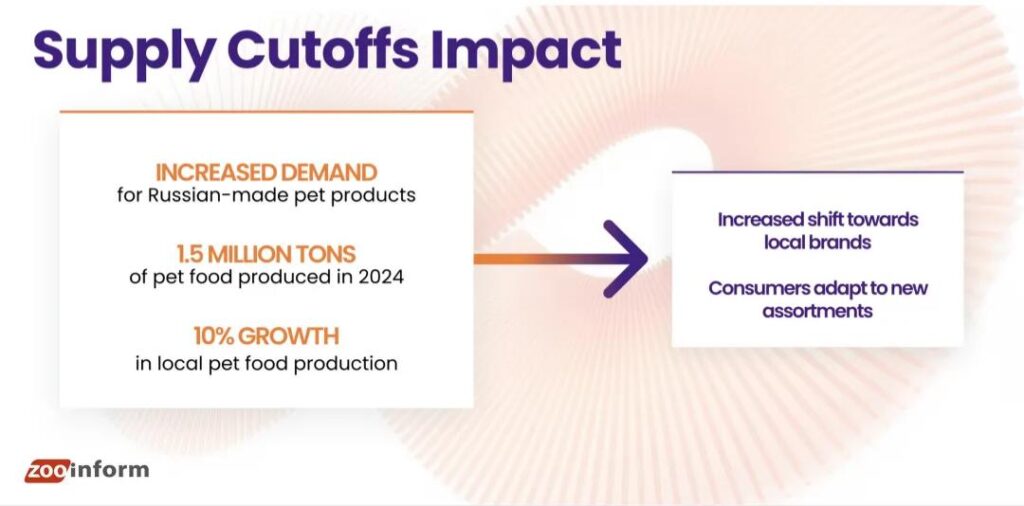
Due to supply disruptions from Canada, the United States, and multiple European countries, only five European suppliers remain active in exporting #petfood to Russia.
This shift has directly accelerated the rise of domestic production, particularly in pet food.
- Multiple large-scale pet food factories have been established
- Existing facilities are expanding production capacity
- Local manufacturers are growing at an annual rate of around 10%
👉 The supply chain structure is being fundamentally reshaped.
03
Consumer Behavior: Closely Following Global Trends
The Russian market is closely aligned with global #petindustry trends.
On one hand:
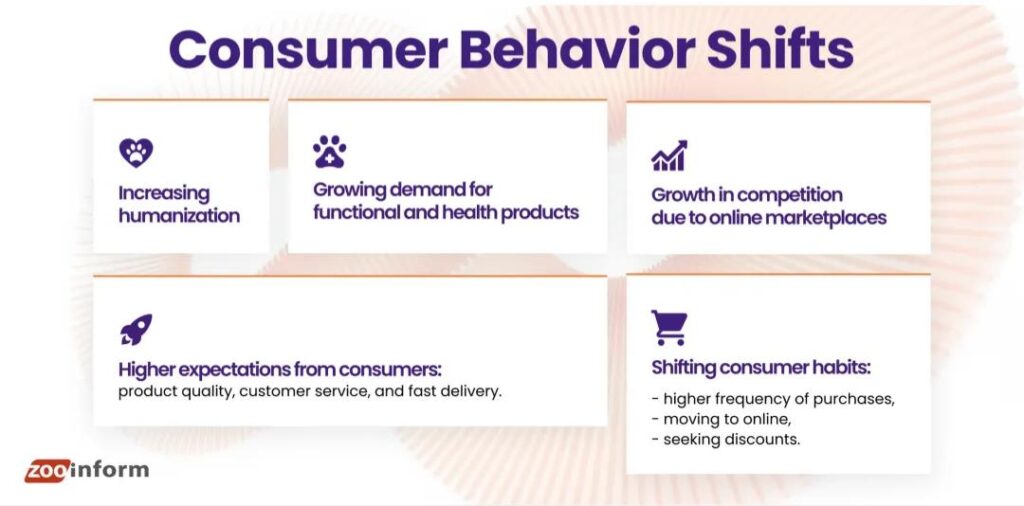
- Pet humanization is highly evident
- Over 90% of #petowners consider their pets as family members
- Increasing focus on #pethealth is driving steady demand for functional and health-oriented products
On the other hand:
- Economic conditions are influencing purchasing behavior
Key changes include:
- More frequent shopping trips with smaller basket sizes
- Rapid growth of online shopping due to better value for money
Last year:
- Online channels grew by 3.6%, surpassing specialty #petstores for the first time
Meanwhile:
- Supermarkets are actively developing private-label products
- Competition in the retail market is becoming increasingly intense
04
Key Challenges: Realities That Cannot Be Ignored
The Russian pet market is currently facing multiple challenges:
- Rising logistics costs and increased complexity
- Difficulty in sourcing raw materials
- Payment-related issues
- Compliance pressure from new product labeling systems
- Adjustments in tax policies
👉 These factors create additional barriers for market entry and operations.
05
Core Opportunities: Finding the “Open Doors”
When it comes to the common concern that “the Russian market is difficult to enter,” the key insight is:
👉 “Instead of trying to break through closed doors, focus on the doors that are open.”
Several promising directions include:
1. Production equipment and raw materials
With local manufacturing on the rise, demand for:
- Extrusion equipment
- Packaging materials
is increasing significantly.
👉 This is often easier than exporting finished products.
2. Plastic products
Following new EU sanctions in July 2024, plastic products are no longer allowed to be exported to Russia.
👉 This creates strong opportunities for manufacturers of high-quality plastic accessories.
3. Cat-related products
With 50 million cats, there is substantial demand for:
- Cat litter
- Cat accessories
- Various cat-related products
4. Smart and innovative products
Russian consumers are increasingly interested in differentiated products, including:
- Smart pet devices
- Innovative accessories
- High-quality toys
5. Veterinary products and consumables
Growing focus on pet health is driving demand for:
- Veterinary equipment
- Consumables (especially dental products)
👉 These categories often do not require special authorization.
6. Emotional consumption products
Pet owners are seeking more interaction and bonding with their pets, driving demand for:
- Toys
- Apparel
- Emotion-driven products
06
Distribution Models: Beyond Traditional Large Distributors
A notable shift in the market is the rise of alternative distribution channels.
With the growth of e-commerce platforms:
👉 Mid-sized sellers are becoming increasingly important partners.
This means:
- Entering the Russian market no longer requires large distributors
- Collaborating directly with e-commerce-focused partners is now a viable and scalable approach
👉 This represents a significant opportunity for new entrants.
Conclusion
“High-quality products will always be in demand.”
As product quality continues to improve, it becomes a key advantage for companies looking to enter the Russian market.