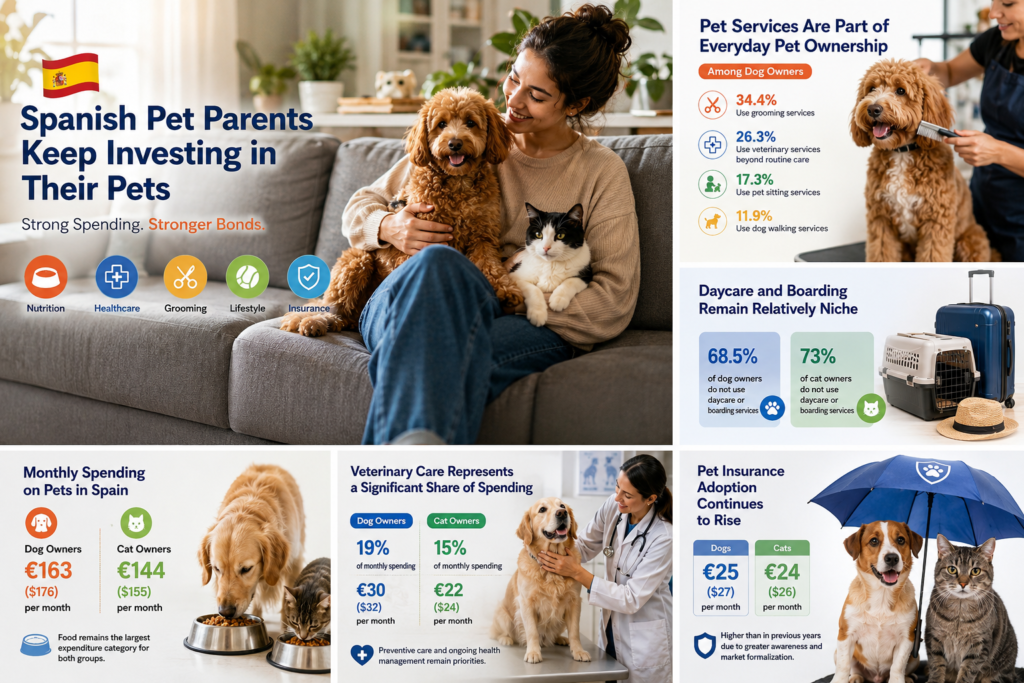
Pet owners in Spain continue to prioritize their pets’ wellbeing, dedicating significant monthly budgets to nutrition, healthcare, grooming, and lifestyle-related expenses.
According to new data from the Spanish pet industry association AEDPAC, spending patterns among dog and cat owners highlight the growing importance of pets within household budgets and daily life.
👉 The findings reinforce a broader trend seen across Europe: pets are increasingly being treated as family members, with spending decisions extending well beyond basic food and care.
Pet Services Are Becoming Part of Everyday Pet Ownership
Many Spanish pet owners regularly use professional services to support their pets’ wellbeing.
Among dog owners:
- 34.4% use grooming services
- 26.3% use veterinary services beyond routine care
- 17.3% use pet sitting services
- 11.9% use dog walking services
Cat owners generally use fewer external services, although veterinary care remains an important category.
👉 As pet ownership becomes increasingly humanized, service-based spending continues expanding alongside traditional product purchases.
Daycare and Boarding Remain Relatively Niche Services
While some service categories are growing, daycare and boarding remain less common among Spanish pet owners.
According to the survey:
- 68.5% of dog owners do not use daycare or boarding services
- 73% of cat owners do not use daycare or boarding services
This suggests that many pet parents continue relying on family arrangements, home-based care, or alternative solutions when traveling.
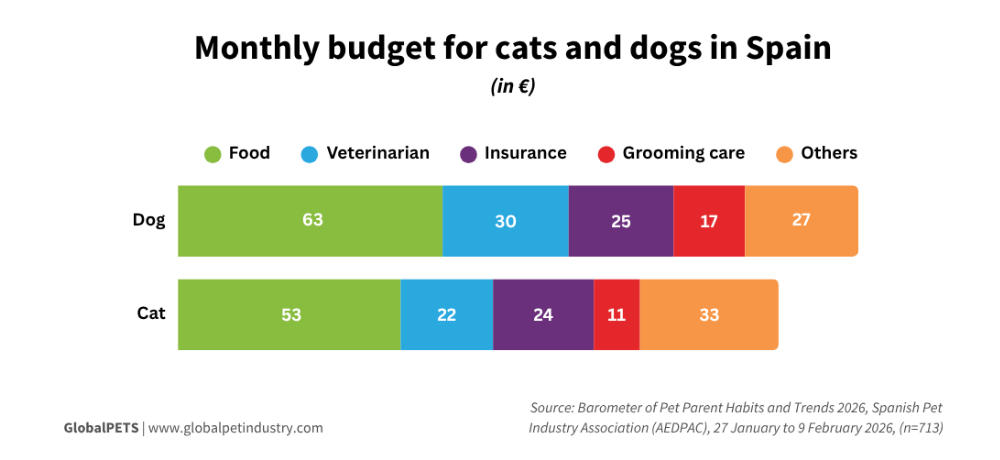
Monthly Spending Reaches €163 for Dogs and €144 for Cats
Spanish pet owners continue allocating substantial monthly budgets to pet care.
Average monthly spending reaches:
Dog Owners
- €163 ($176) per month
Cat Owners
- €144 ($155) per month
Food remains the largest expenditure category for both groups, reflecting the central role nutrition plays in overall pet care spending.
👉 Even during periods of economic uncertainty, pet food remains a highly resilient category.
Veterinary Care Represents a Significant Share of Spending
Healthcare continues to account for an important portion of monthly pet budgets.
For dog owners:
- Veterinary care represents 19% of monthly spending
- Average monthly expenditure reaches €30 ($32)
For cat owners:
- Veterinary care accounts for 15% of monthly budgets
- Average spending reaches €22 ($24) per month
👉 Preventive care and ongoing health management remain priorities for many pet owners, supporting continued demand for health-related products and services.
Grooming Continues to Generate Consistent Spending
Grooming remains another established spending category.
Among dog owners:
- Grooming accounts for 11% of monthly spending
- Average expenditure reaches €17 ($18) per month
Among cat owners:
- Grooming represents 8% of monthly budgets
- Average spending reaches €11 ($12) per month
While smaller than food or veterinary care, grooming continues to generate steady recurring demand.
Accessories, Toys, and Lifestyle Products Remain Important
Pet owners are also investing consistently in products that enhance daily life and enrichment.
Additional expenses—including:
- Hygiene products
- Toys
- Accessories
- Gifts
average:
Dog Owners
- €27 ($29) per month
Cat Owners
- €33 ($36) per month
👉 These categories highlight how pet spending increasingly includes lifestyle and emotional purchases rather than purely functional necessities.
For brands selling products such as:
- Harnesses
- Leashes
- Collars
- Apparel
- Interactive toys
this trend continues to create opportunities for value-added and differentiated offerings.
Pet Insurance Adoption Continues to Rise
One of the most notable findings is the growing adoption of pet insurance.
Monthly premiums now average:
Dogs
- €25 ($27)
Cats
- €24 ($26)
According to AEDPAC, these figures are higher than in previous years.
The increase reflects:
- Greater market formalization
- Changing regulatory requirements
- Growing awareness of long-term pet healthcare costs
👉 Pet owners are becoming increasingly proactive in managing future healthcare expenses.
Final Insight
Spanish pet owners continue demonstrating strong commitment to their pets through consistent spending across multiple categories.
Key themes emerging from the data include:
- Strong investment in nutrition
- Continued demand for veterinary care
- Stable spending on grooming and enrichment products
- Growing interest in pet insurance
- Increasing humanization of pet ownership
Most importantly:
👉 Spending is no longer concentrated solely on food.
Pet parents are allocating meaningful budgets to health, comfort, enrichment, and long-term wellbeing, creating opportunities across both product and service categories.
As consumer expectations continue evolving, brands that deliver value, functionality, and emotional connection are likely to remain well positioned in the Spanish pet market.
✅ 2️⃣ What This Means for the Pet Industry
Several important trends are emerging from Spain’s pet market:
- Pet ownership continues becoming more humanized
- Veterinary and health-related spending remains strong
- Lifestyle and enrichment products are gaining importance
- Insurance adoption is increasing
- Consumers are spending across a wider range of categories beyond food
At the same time:
👉 Pet owners are becoming more sophisticated in how they care for their animals, allocating budgets across prevention, wellbeing, and everyday quality-of-life products.
This trend supports continued growth in premium and functional pet categories.
Source: GlobalPETS