At a time when e-commerce growth has slowed across many sectors, one category continues to show remarkable resilience: the pet industry.
And leading that category is Chewy, the world’s largest online pet retailer.
Chewy recently reported its financial results for the first quarter ended May 3, 2026. While both revenue and profit exceeded market expectations, management simultaneously lowered its full-year outlook.
At first glance, this may seem contradictory.
However, the combination of strong current performance and a more cautious outlook reveals an important reality about today’s pet market:
👉 The post-pandemic pet spending boom is fading, and even industry leaders are preparing for a more challenging consumer environment.
Strong Sales, Stronger Profitability
From a financial perspective, Chewy delivered another impressive quarter.
The company reported:
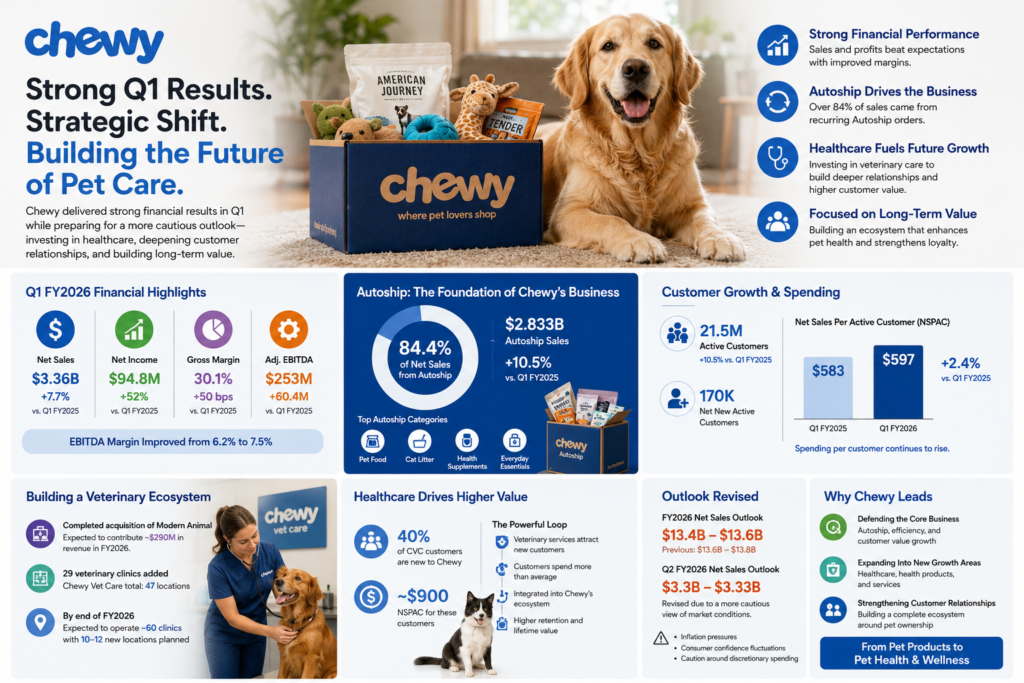
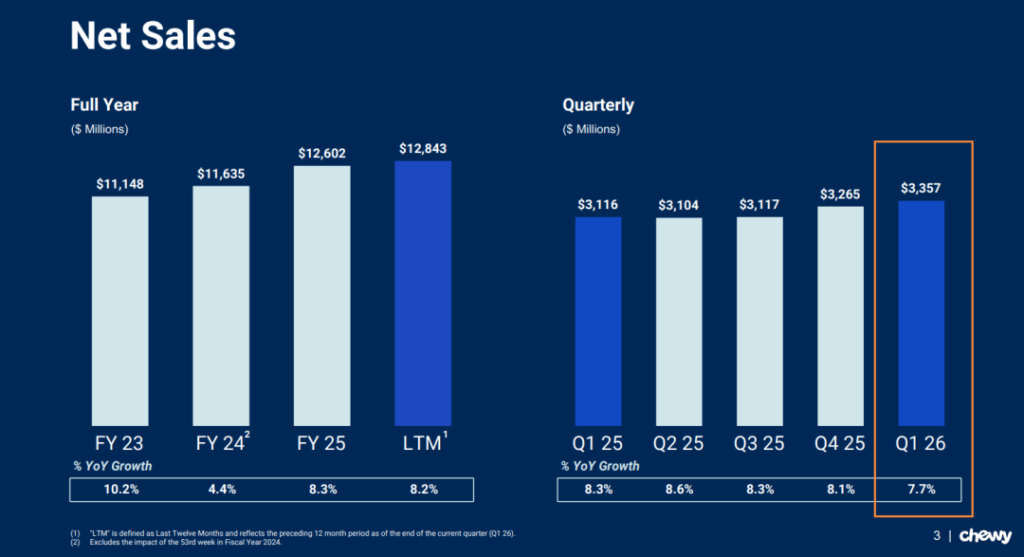
- Net sales of $3.36 billion, equivalent to approximately RMB 22.72 billion
- Year-over-year growth of 7.7%
More importantly, profitability improved significantly.
Chewy generated:
- Net income of $94.8 million
- Year-over-year growth of 52%
Gross margin reached:
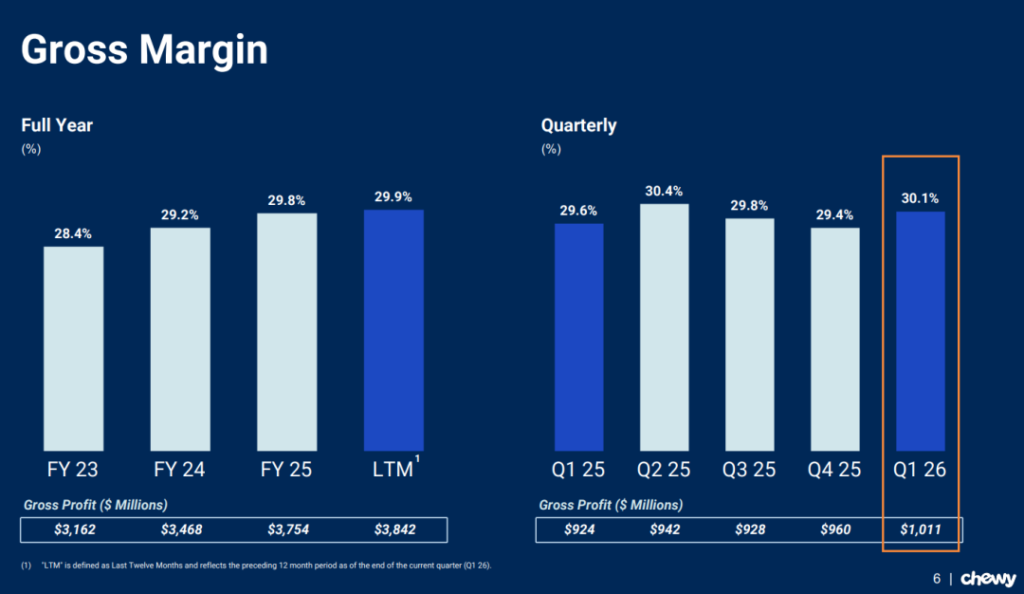
- 30.1%
- Up 50 basis points compared with the previous year
In other words:
👉 Chewy is not only selling more products—it is becoming increasingly effective at turning revenue into profit.
Higher Margins Are No Accident
Adjusted EBITDA reached:
- $253 million
An increase of:
- $60.4 million year over year
EBITDA margin improved from:
- 6.2%
- To 7.5%
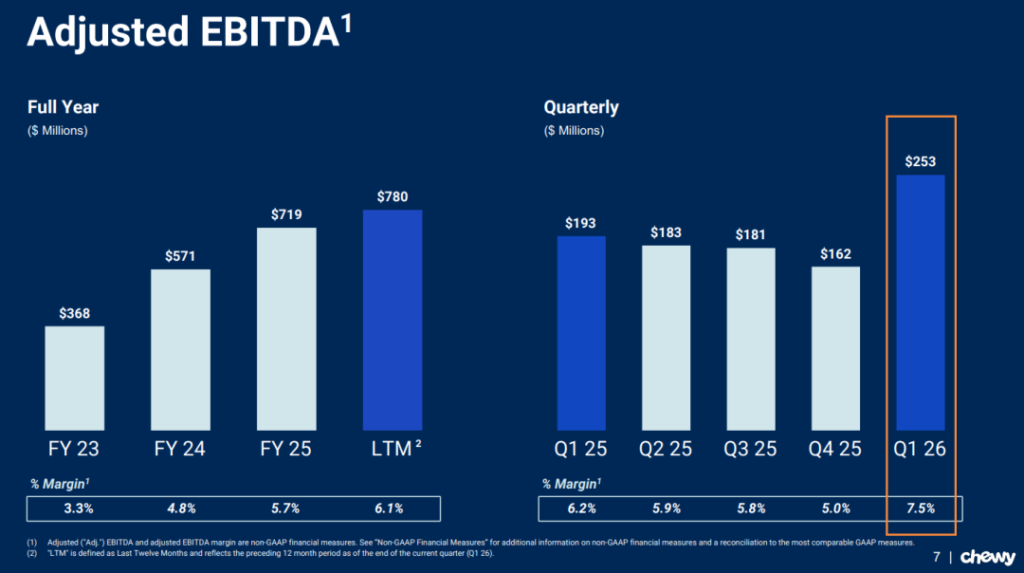
According to CEO Sumit Singh, three major factors contributed to this improvement:
- Growth in sponsored advertising revenue
- A product mix shift toward higher-margin categories, particularly health-related products
- Increased automation and scale efficiencies that reduced operating costs
These initiatives have been part of Chewy’s strategy for years.
The difference now is that they are beginning to deliver meaningful financial results.
Autoship Has Become the Foundation of the Business
One of the most striking figures in the report relates to Chewy’s Autoship program.
Autoship sales increased:
- 10.5% year over year
- Reaching $2.833 billion
This represented:
- 84.4% of total quarterly net sales
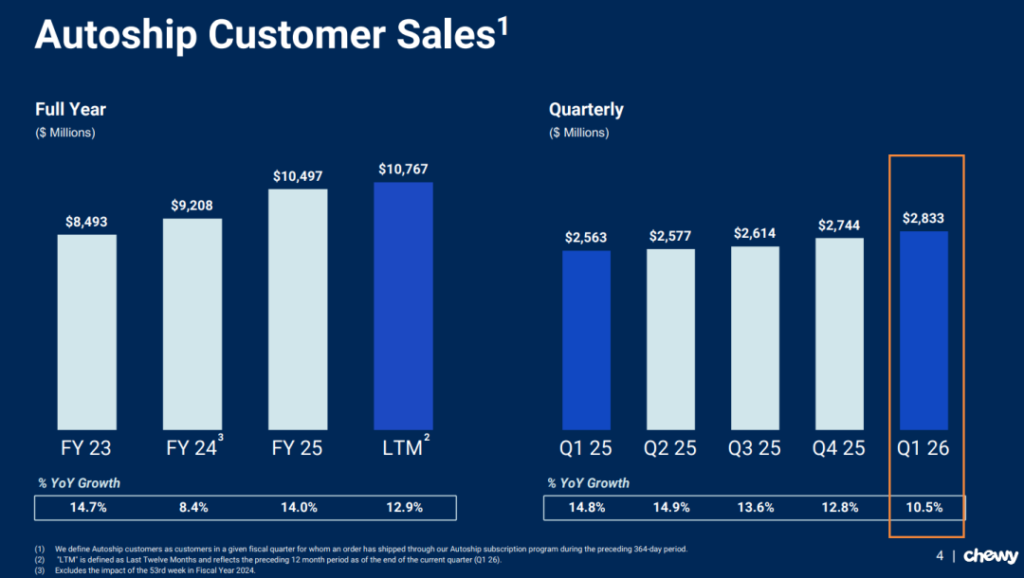
That means more than four out of every five dollars generated by Chewy came from recurring subscription-based purchases.
👉 This is one of the biggest reasons Chewy remains a benchmark in the pet industry.
Products such as:
- Pet food
- Cat litter
- Health supplements
- Everyday pet essentials
are naturally suited to recurring purchases.
By making replenishment automatic, Chewy reduces friction, increases convenience, and creates highly predictable revenue streams.
For many pet businesses, this is the gold standard of customer retention.
Customer Growth Has Slowed, But Spending Per Customer Is Rising
Chewy’s active customer base reached:
- 21.5 million customers
An increase of:
- 3.6% year over year
The company added:
- 170,000 net active customers
While customer growth has moderated compared with previous years, spending per customer continues moving higher.
Net Sales Per Active Customer (NSPAC) increased to:
- $597
Compared with:
- $583 one year earlier.
👉 This signals an important shift.
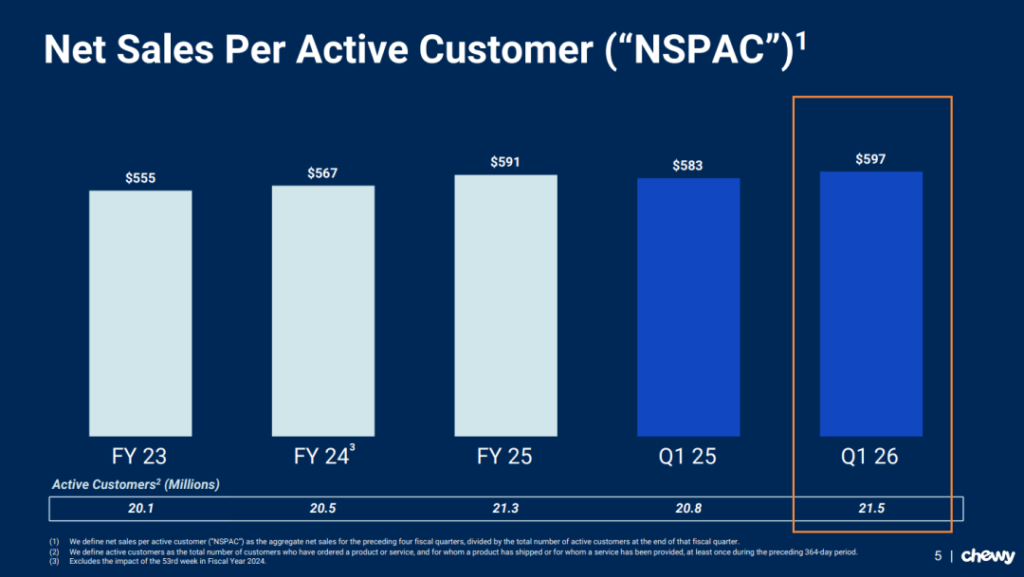
Chewy is gradually moving from a customer acquisition phase toward a customer value optimization phase.
Rather than relying solely on adding new users, the company is generating more revenue from existing customers.
Building a Veterinary Ecosystem Is the Next Growth Engine
If pet food built Chewy’s foundation, veterinary care may shape its future.
The company highlighted several major healthcare investments during the quarter.
Most notably, Chewy completed its acquisition of Modern Animal, a deal expected to contribute approximately:
- $290 million in revenue during the current fiscal year.
The acquisition added:
- 29 veterinary clinics
bringing Chewy Vet Care’s total clinic count to:
- 47 locations
By the end of fiscal 2026, the company expects to operate:
- Approximately 60 clinics
and plans to open:
- 10 to 12 additional locations.
Healthcare Creates Higher Value Customers
Chewy’s healthcare strategy is already showing results.
Within the Chewy Vet Care (CVC) network:
- 40% of customers were completely new to Chewy
Even more impressive:
- These customers generated an NSPAC of approximately $900
significantly above the company average.
This creates a powerful business loop:
- Veterinary services attract new customers.
- Those customers spend more than average.
- They become integrated into Chewy’s broader ecosystem.
- Retention and lifetime value increase.
👉 Healthcare is not simply a new revenue stream—it is becoming a customer acquisition and loyalty engine.
Why Healthcare Matters More Than Pet Food
The strategic logic is straightforward.
Pet food remains highly competitive and relatively easy to replicate.
Veterinary care is different.
It offers:
- Higher trust barriers
- Stronger customer relationships
- Higher margins
- More recurring interactions
Chewy is gradually evolving from a company that sells #petproducts into a company that manages pet health and wellness.
That transition could become one of the most important competitive advantages in the industry.
Despite Strong Results, Chewy Lowered Its Outlook
Perhaps the most surprising aspect of the earnings report was management’s decision to reduce full-year guidance.
Chewy lowered projected net sales from:
- $13.6 billion–$13.8 billion
to:
- $13.4 billion–$13.6 billion
Second-quarter guidance was also reduced to:
- $3.3 billion–$3.33 billion.
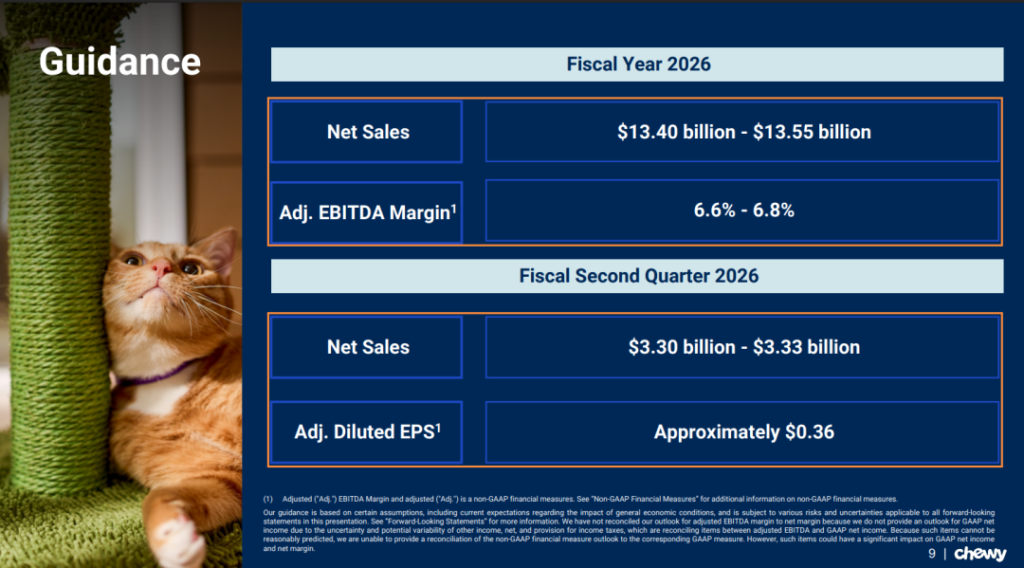
CEO Sumit Singh described the revised forecast as a more conservative view of market conditions.
According to management, the consumer environment has become increasingly challenging since the beginning of the year.
Factors include:
- Lingering inflation pressures
- Consumer confidence fluctuations
- Increased caution around discretionary spending
👉 Rather than ignoring market risks, Chewy appears to be preparing for them.
Why Chewy Remains the Industry Benchmark
Chewy’s first-quarter performance highlights what separates market leaders from competitors.
The company is succeeding on multiple fronts simultaneously:
Defending the Core Business
- Autoship subscriptions drive recurring revenue
- Customer spending continues rising
- Operational efficiency improves profitability
Expanding Into New Growth Areas
- Veterinary care
- Health products
- Higher-margin services
Strengthening Customer Relationships
- Creating a closed-loop ecosystem around pet ownership
- Increasing customer lifetime value
- Building trust beyond product sales
Final Thoughts
The pet industry is entering a different phase than the one experienced during the pandemic boom years.
Growth remains available, but it is becoming harder to achieve.
Chewy’s response provides an important lesson for pet brands:
👉 Winning today is no longer just about selling more products.
It is about creating recurring relationships, expanding into higher-value services, improving operational efficiency, and building a complete customer ecosystem.
Chewy earned customer trust through pet products.
It is now leveraging that trust to expand into healthcare, services, and long-term customer relationships.
That is why, despite a more cautious outlook, Chewy remains one of the most valuable case studies in the global pet industry.