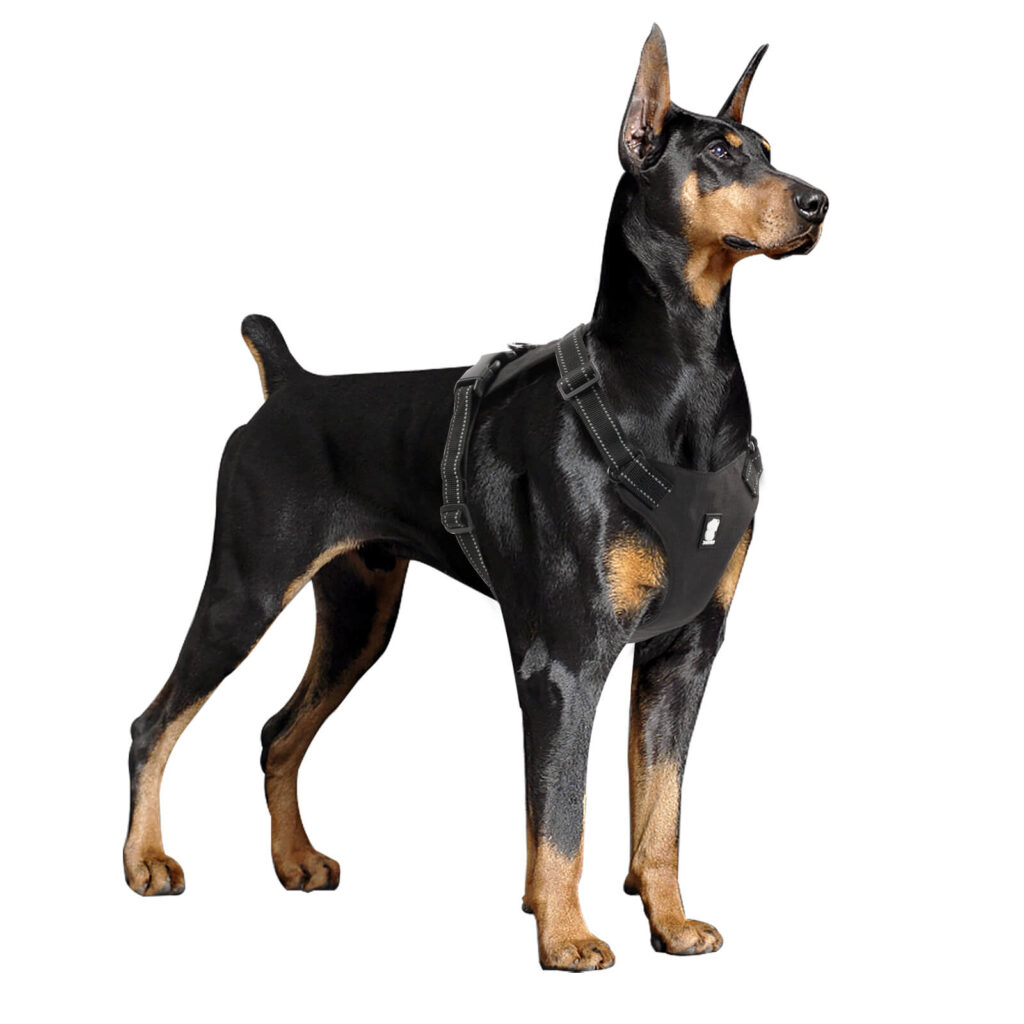
Two harness samples can look alike while using different webbing, hardware or reinforcement details. A neat sample also leaves questions about what will be checked during production and which changes need approval. Buyers need a shared, checkable definition of quality before those questions become order disputes.
This checklist helps brands, importers and sourcing teams review sewn walking harnesses before sample approval, bulk production or repeat orders. It connects specifications, measurements and inspection records with the evidence needed for each decision. Medical-support, lifting and vehicle-restraint products require separate evaluation.
Define the Harness and Order Reference
Start with the harness type, intended walking use, size range and destination market. Record relevant use conditions and features so the supplier understands the product being developed. Buyers still comparing styles can explore the Dog Harness range separately from this quality review.
Turn “good quality” into an order reference. Bring together the current drawing, measurement chart, reference photos and bill of materials, or BOM. The BOM should identify the materials and components used in each relevant location, including the webbing, lining, buckles, adjusters and rings. Give these documents a revision number or date and name the sample they describe.
Resolve conflicting instructions before approval. If the drawing shows one buckle and the sample uses another, record which version is proposed and who can authorize the change. Keep a simple chain for each review item: requirement, approved reference, evidence, open issue and decision. A supplier comparison becomes more useful when every quotation and sample review refers to the same revision.
Check Material and Hardware Specifications
Webbing, Fabric, Mesh and Padding
Specify webbing composition, width, thickness and finish where they matter to the design. Identify the approved material reference and agree how incoming material will be compared with it. Record any backing, coating or elastic section separately when present. A material substitution needs review even when the color looks unchanged.
For fabric, mesh, padding and binding, compare material identity, placement, edge coverage and the agreed appearance or feel. These observations help identify differences between samples. A soft hand feel or a material name such as nylon or polyester provides limited evidence about finished-harness performance. Define any required outcome separately and ask what evidence would substantiate it.
Keep the specification specific to this product. Avoid borrowing an unrelated SKU's material description or assuming that a thicker component satisfies the intended requirement.
Buckles, Adjusters and Attachment Rings
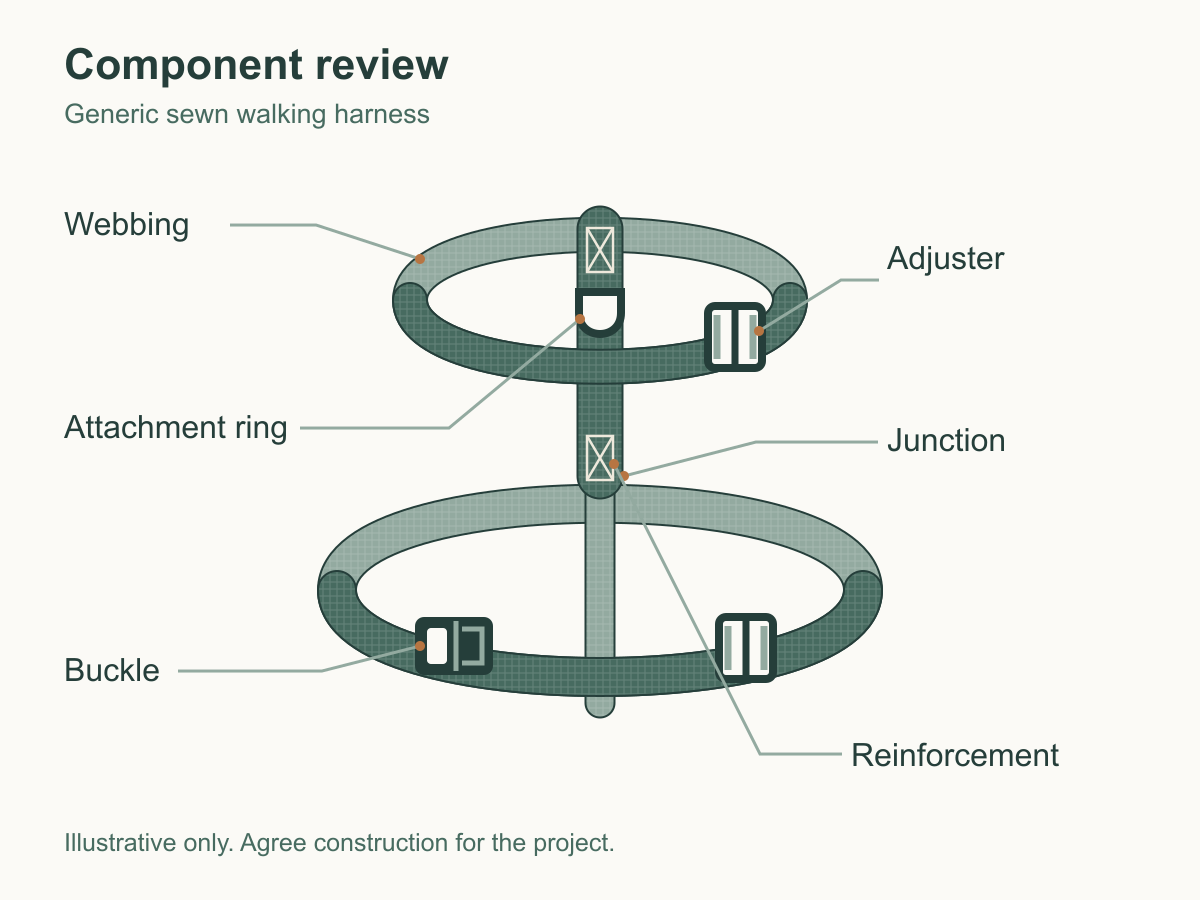
Identify each buckle and adjuster by component reference, material, dimensions and intended position. Compare the hardware with the specified webbing width and routing. During sample review, check closure and release, engagement, strap movement and whether the assembly matches the drawing. Record unexpected sticking, twisting or movement for investigation against agreed criteria.
For a D-ring or other attachment, define geometry, dimensions, edges, surface finish and placement. Review how it is held in the assembly and document visible burrs, rough areas or differences from the reference. Confirm the load expectation and relevant evidence with the supplier where performance is part of the project requirement.
A buckle that closes during a hand check still needs separate evidence for any claimed load performance. The same caution applies to a metal ring's appearance. Component material alone cannot establish the complete harness's strength.
Review Construction and Workmanship
Load Paths and Reinforcement Locations
Use the drawing and sample to trace the connection between the attachment ring, webbing, junctions and fastening points. Mark the locations that need construction review, including strap folds, panel connections and hardware attachments. Compare routing, overlap and reinforcement placement with the approved reference.
Where the design includes bartacks or other reinforcement, identify their agreed locations. Record a missing or changed detail as an issue requiring a decision. The review should establish whether the proposed construction matches the specification. Strength conclusions require relevant evidence beyond the drawing or photograph.
Stitching and Finishing Checks
Inspect visible stitching, seam alignment, edge finishing and symmetry. Missed stitches, loose thread, fraying, exposed edges or uneven component placement should be described clearly enough for someone else to locate the issue. Include a marked photo, the sample revision and the affected size or location.
Use agreed criteria to decide whether the observation needs a comment, revision, rejection or further investigation. Some differences may require clarification before their significance can be judged. Avoid assigning a universal defect severity to every visible imperfection.
For example, a hypothetical review note could identify an attachment seam that differs from the drawing, request supplier clarification and leave approval open. A neat replacement seam would still need review against the agreed construction and evidence requirements.
Measure the Finished Harness and Adjustment Range
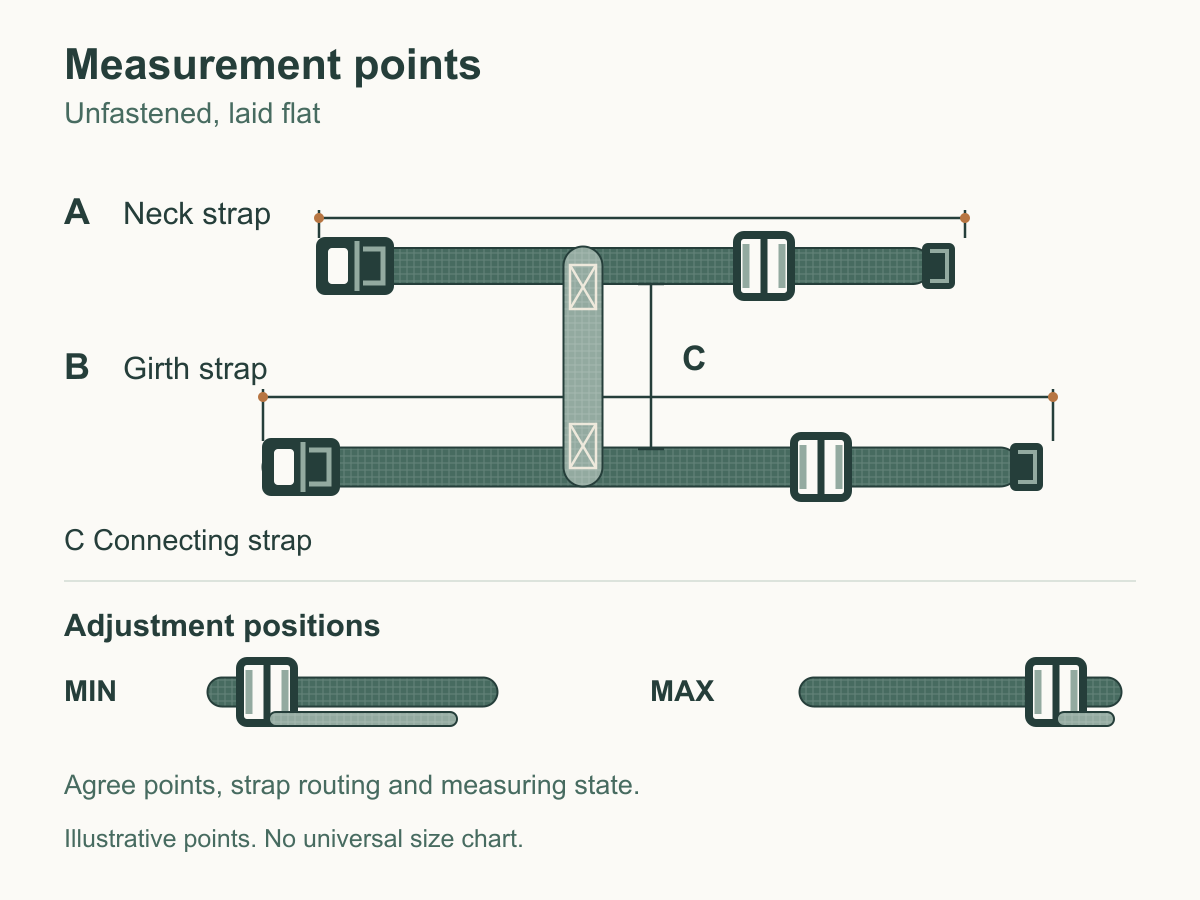
A size label such as S, M or L needs a supporting measurement definition. Agree where each measurement starts and ends, the state of the harness during measurement and the units used. Finished-product measurements should be recorded separately from the dog's body measurements used for size guidance.
Review strap lengths, panel dimensions, hardware position and the minimum and maximum adjustment range where relevant. Note how straps are routed through adjusters and how the harness is positioned for the check. Defined conditions let the buyer and supplier compare results on the same basis.
For each point, record the size, target dimension, agreed tolerance and measured result against the current chart revision. Resolve a measurement-method disagreement before judging a dimensional difference. Ask which sizes need review for the project; approval of one size leaves the rest of the range unverified.
These records describe manufacturing dimensions and adjustment limits. Any claim about suitability for a particular dog or application needs its own basis. A recommended body-weight range cannot serve as a harness load rating.
Record Sample Approval and Open Issues
Give each sample a clear role. A development sample is used to review and revise the proposal. An approved reference sample identifies the accepted version for specified features. Pre-production approval is the agreed checkpoint for confirming readiness before bulk work. Bulk production makes the order quantity, while final inspection examines finished goods within its defined scope.
Agree how these functions apply to your project. If one physical sample serves more than one role, record that explicitly. A sample marked “approved” still needs a defined revision, scope and approval conditions.
Keep the sample ID, date, linked specification revision, approved changes, measurement sign-off, reference photos and approver together. List open issues with an owner, required action and closure evidence. State whether an issue prevents production approval or remains subject to a specific condition. Confirm who holds the reference and how the supplier will access the same version.
Verde's published development workflow describes reviewing product details and using approved samples as production references. The exact approval record and checks for an order still need agreement.
Before bulk approval, reconcile the sample with the documents. An approved sample provides a comparison reference; incoming checks, production controls and finished-lot evidence are still needed to evaluate the order.
Match Testing Evidence to the Order
Decide What Needs Testing Beyond Visual Checks
Ask which requirement remains unanswered after material identification, measurements and workmanship review. If the project specifies load performance, discuss whether the evidence must concern webbing, hardware, an attachment joint or the complete assembly. Match the test object to the claim being evaluated.
Other questions may concern washing, abrasion or hardware exposure, depending on intended use and materials. Select relevant evidence with competent laboratory input. Avoid treating a list of available tests as a mandatory program for every walking harness.
Keep three questions separate: does an applicable method exist, does this project require it, and has the supplier actually performed it on a relevant specimen? Ask for the report before treating test execution as established. A factory tour or management certificate also leaves order-specific product evidence to be checked.
Check the Specimen, Conditions and Acceptance Basis
Review the report against the order. Confirm:
- Model, component identities and BOM or sample revision.
- Tested specimen, assembly configuration and test scope.
- Method and version, test conditions and recorded results.
- Acceptance criterion agreed for the project and the reported decision.
Clarify missing identifiers or differences in hardware, material or construction. A report for one component leaves the rest of the assembly outside its demonstrated scope. Ask whether a proposed change affects the evidence needed for approval.
Agree the acceptance basis before commissioning the test. This checklist supplies no universal force, cycle count or pass value. Those choices depend on the product, intended use, applicable method and project requirements.
Agree Production Checks and Lot Acceptance
Separate Incoming, In-Process and Finished Checks
Set the control plan before the purchase order and production approval. Define what will be checked, when, by whom and where the result will be recorded. Agree the scope and frequency for the order with the supplier and any appointed inspector.
Incoming checks concern materials and components before use, such as their identity and agreed dimensions or appearance. In-process checks examine relevant assembly stages, such as strap routing, reinforcement placement or attachment work while production is underway. Finished-product inspection examines completed harnesses against the specified measurements, workmanship, function and presentation requirements.
Name a record owner for each checkpoint and link results to the order, item and revision. If a difference appears, identify who can decide the next action and how affected goods will be handled pending that decision. These are buyer planning points; each supplier's actual process needs confirmation.
Set Acceptance Criteria and Release Responsibilities
Define defect descriptions, dimensional limits and the evidence required for acceptance before production starts. Agree who may accept, request revision or reject, and which unresolved issues require a hold. Define any defect categories for the specific product and order so both parties can interpret inspection findings consistently.
Sample approval establishes a reference. Process checks monitor defined production points. Finished inspection records findings on completed goods within its scope. Lot acceptance is the decision made about the lot using the agreed plan and evidence.
ISO 2859-1:2026 addresses acceptance sampling by attributes, indexed by acceptance quality limit, or AQL, for lot-by-lot inspection. If such a plan is proposed, agree its applicability and parameters with the responsible parties. AQL supplies no product certification or assurance that every unit is defect-free. No sampling level or acceptance number is prescribed here.
Record the release decision, outstanding conditions and authorized decision-maker. An inspection report with unresolved findings needs a documented disposition before it can support the agreed release decision.
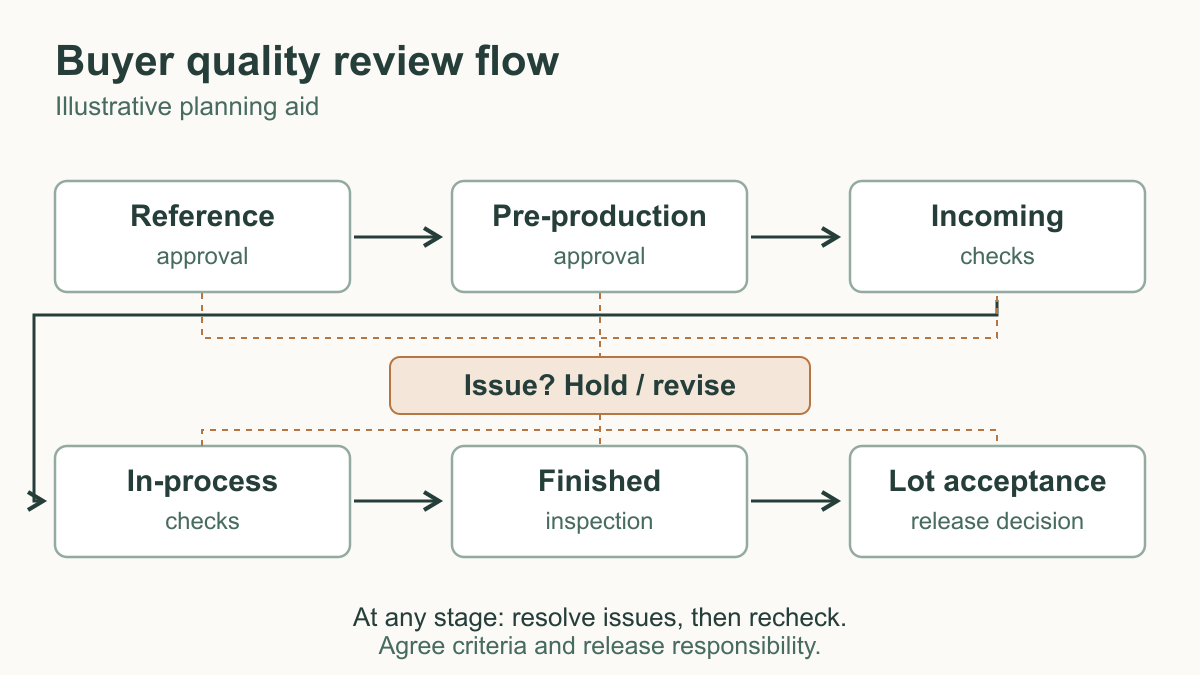
Confirm Release Details and Repeat-Order Changes
Branding, Labels, Traceability and Packing
Approve logo artwork and placement, label content, identification details and packing instructions against the order revision. Check size and item identification, pack quantities and any agreed carton information. Assign responsibility for confirming the destination-market requirements and approving the relevant documents and labels.
For EU-destined products, ask which risk-analysis, documentation and identification duties apply under the General Product Safety Regulation, considering its scope and the responsible economic operator's role. Confirm the product-specific position with qualified advice where needed. Labels and packing approval alone cannot establish compliance.
Substitutions, Open Issues and Repeat Orders
Before a repeat order, confirm that the approved BOM, sample and documents are still the intended reference. Require proposed substitutions or construction changes to be identified before use. Record the affected component or revision, reason for the change, review needed and authorized decision. Decide whether a revised sample, measurement check or new evidence is needed.
For nonconforming goods, agree the correction and how its completion will be verified. Keep the original finding, supplier response, follow-up evidence and closure decision together. A message saying “corrected” leaves the result to be verified. Link the accepted change and closure record to the next order's reference.
Use this worksheet structure for the review. The prompts below illustrate records to request; they contain no actual inspection findings.
| Review area | Approved reference | Evidence/result requested | Open issue | Owner/disposition |
|---|---|---|---|---|
| Material or hardware | BOM/component revision | Identity and agreed checks | Difference to clarify | Named owner; decision pending |
| Construction or dimensions | Drawing/chart revision | Marked photos or measurements | Deviation to review | Named owner; action pending |
| Sample or production release | Sample/order revision | Approval and inspection records | Condition to close | Authorized release decision |
| Repeat-order change | Current approved revision | Change review and closure evidence | Substitution to approve | Authorized revision decision |
Quality control starts with agreed requirements. Keep the approved reference, relevant evidence and production decisions connected, and resolve missing information with a named owner before approval or release.
Discuss Your Dog Harness Specification with Verde. Share the available reference sample, photos, drawing or tech pack that you have the right to disclose, together with the intended use, market, target quantity, material and hardware requirements, size chart, branding, packing and open development or QC questions. These inputs provide a basis for discussing project-specific next steps.