
Two recovery suits can look similar while relying on different materials, measurements, openings and approval assumptions. A reference photo leaves many of those decisions unresolved. For a brand, importer or wholesale buyer, the sourcing task is to make them clear enough for suppliers to quote, sample and review against the same requirements.
This guide connects product specifications with supplier evaluation, sample approval and order controls. Use it to identify what needs agreement before initial production and what must remain identifiable for repeat orders.
Define the Recovery Suit Requirement Before Comparing Suppliers
Start with a brief that identifies the intended species, garment form, target coverage and access requirements. Describe the proposed application and any features that need development. For post-operative applications, leave suitability for an individual animal and care instructions to the treating veterinarian, consistent with VCA's postoperative guidance.
Identify the destination market, sales channel, estimated quantity and intended size and colour range. Mark estimates and unresolved choices. A supplier should be able to distinguish a fixed requirement from an option that needs a proposal.
An available sample, drawing or photo can provide a starting reference. Annotate what to retain, change or investigate. When exploring a recovery suit product range, select references for their relevant design features, then document the details the listing leaves open.
Name the person who consolidates technical comments and identify who can approve design, commercial terms and production release. Include any required specialist review in that responsibility list. Keep product-design decisions separate from claims about medical outcomes.
Specify Materials and Contact-Area Construction
Identify Fabrics, Layers and Components
Give each proposed fabric, lining, additional layer and fastening component an identifiable reference. Record relevant attributes such as composition, construction, weight, stretch direction, colour and surface appearance. Ask suppliers to identify their proposed option against those requirements, including any substitution.
Describe where each component sits in the garment. Use marked images or drawings for inside seams, binding, elastic and areas where closures contact the garment or wearer. Compare the sample's seam finish, exposed edges and component placement with those references. Replace a vague request for a better finish with the location and observable change required.
For a fastening-related comment, identify the panel side, attachment point and adjacent seam in the same image. Agree the detail the next sample must show, and record any construction change needed to achieve it.
Review swatches alongside the intended construction. An accepted fabric reference still leaves the garment's layers, seams and closures to be confirmed. Keep the selected references together so later comments refer to the same combination.
Separate Requested Performance From Evidence
A material name cannot establish finished-product performance. If stretch behaviour, wash stability or another property affects the sourcing decision, define the requirement and ask what evidence is available.
Check which material or finished construction was evaluated, how it was assessed and what result was reported. Note differences between that evidence and the proposed garment. An observation of hand feel can support a sample comment; it cannot substantiate a skin-safety or medical claim.
Record unsupported properties as unresolved requirements. Agree whether further evidence, a revised option or removal of the proposed claim is needed before approval.
Agree on Sizing, Openings and Closure Design
Separate Body and Finished-Garment Measurements
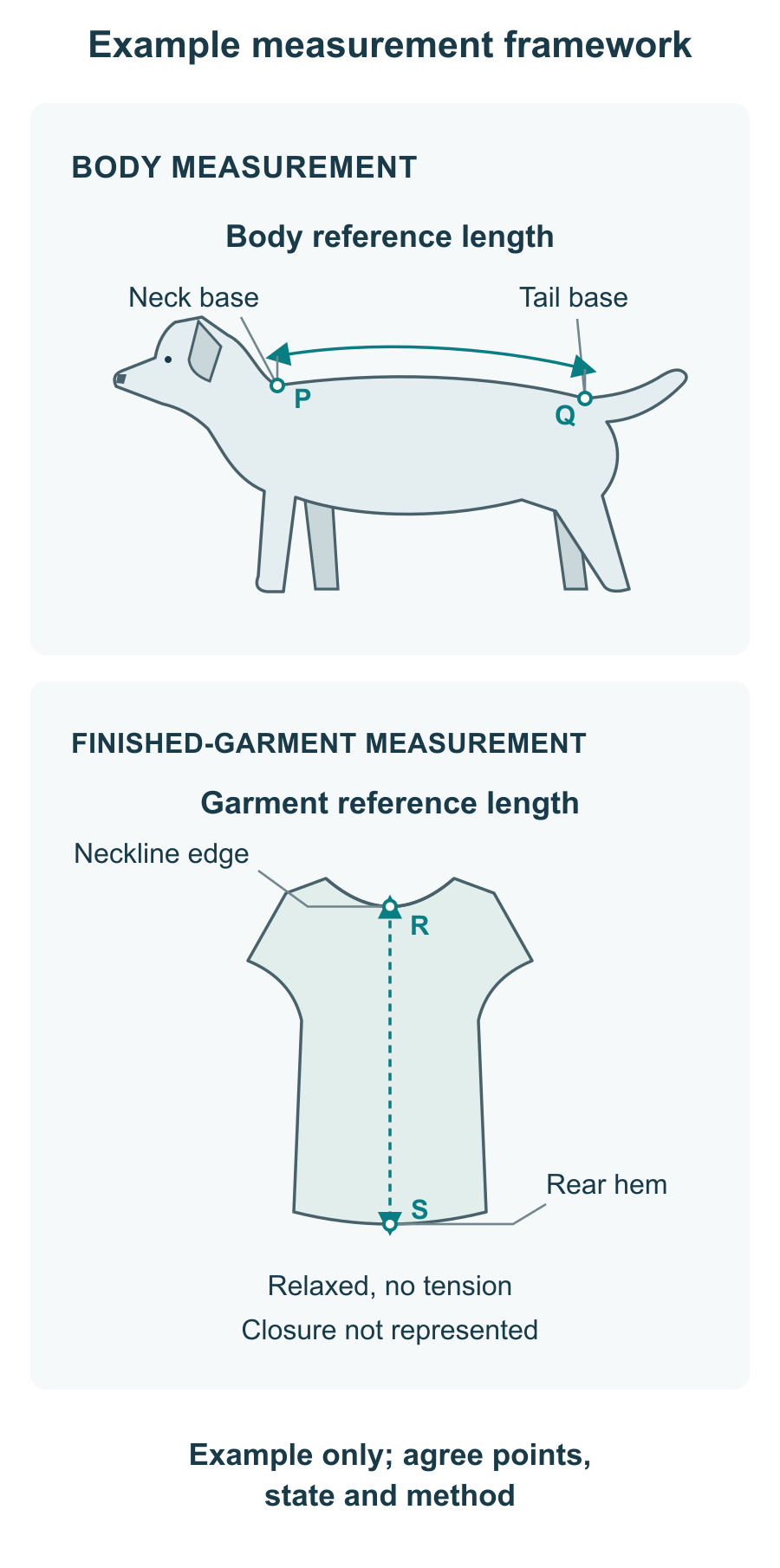
Use separate charts for the intended wearer's body measurements and the manufactured garment. Document how the proposed fit connects them. Copying body values into a garment chart leaves the intended allowance and construction assumptions unclear.
For each point of measure, define the start and end points, units and measuring method. State whether a value is a flat width or circumference, how the garment is positioned, whether closures are fastened and how stretch is treated. A diagram gives both parties the same measurement reference.
Choose a reference size and agree how the range changes from it. Grading describes changes between sizes; tolerance defines permitted variation around a specified measurement. Agree these for the garment and relevant points, with no blanket increment or tolerance assumed across the range.
Review Openings and Closures on the Intended Design
Map neck and leg openings, target coverage and any required rear or abdominal access against the selected design. Review their relationship to the intended body shape and size range. Record which areas need sample confirmation, particularly where a change to an opening affects surrounding panels or fastening positions.
A button-style recovery suit example provides one identifiable design reference. For the chosen project, specify fastening type, placement and attachment details. Review fastening operation, putting the garment on and removing it, and retention against the agreed design requirements. Document unwanted opening or movement observed during the approved review method.
No fastening system is universally suitable. Design review and measurement agreement do not establish a medical, comfort or escape-prevention outcome.
Compare Supplier Responses and Quotation Scope
Send prospective suppliers the same request for quotation, or RFQ, revision. Include available drawings or samples, material and construction references, measurement requirements, quantity and assortment, branding, packing, target market and timing needs. List unresolved decisions and the input requested from the supplier. Partial specifications can begin a discussion when their gaps are visible.
Compare responses using a short evidence checklist:
- Has the supplier acknowledged the reference revision and identified unclear requirements?
- Are proposed materials, substitutions and excluded features stated?
- Who develops or revises the design and pattern, selects components and approves changes?
- What sampling, decoration, labels and packing are included or quoted separately?
- Which quantity conditions, approval dependencies and delivery assumptions affect the offer?
For OEM or ODM discussions, clarify who retains working files and approved references, who may change them and who makes final decisions. Those service labels leave responsibilities to be agreed for the project.
Verde's published development review describes starting with inputs such as a sample, photo, drawing, measurement chart or early idea. Confirm the support and responsibilities available for the specific recovery-suit project.
Request explicit confirmation of MOQ, sample charges, price scope and timing. Compare offers on the same assumptions before interpreting a price difference. A response that identifies exceptions gives you specific points to resolve before sampling or order commitment.
Ask for a marked-up specification or a list of accepted requirements and exceptions. Connect a revised offer to the changed inputs. If an alternative fabric or packing format is proposed, review its effect on sample scope and approval dependencies before accepting a lower quotation.
Evaluate Samples and Record Approval Limits
Track Sample Versions and Open Issues
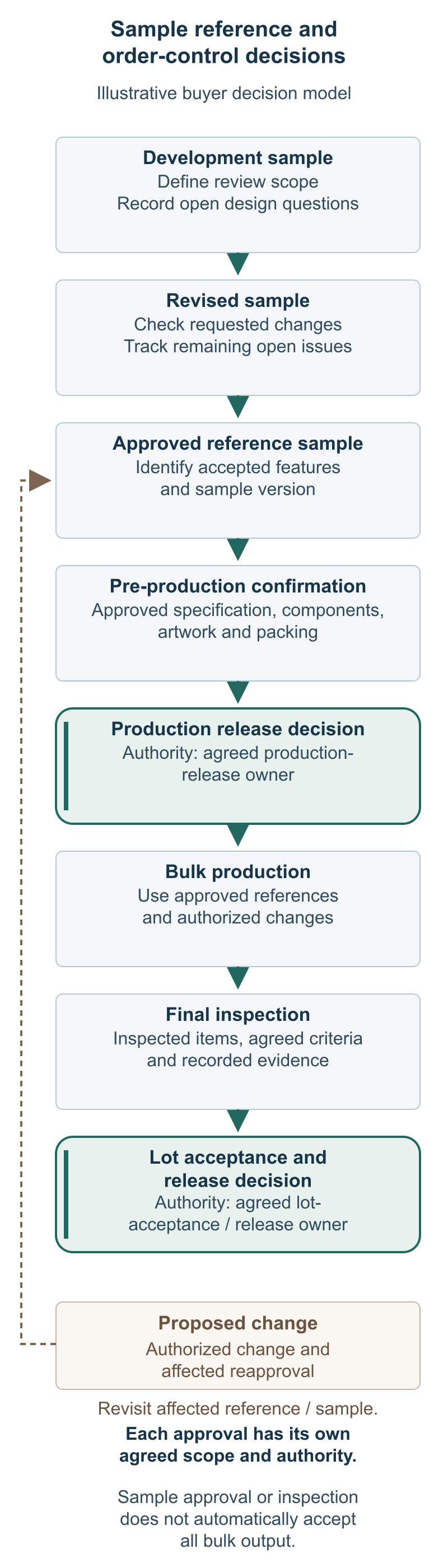
Agree what each sample is intended to establish. Record its version, represented size, materials, components and features, together with temporary items and anything outside review scope. Use stage terms consistently:
| Stage | Decision to record |
|---|---|
| Development sample | Which design or construction questions are being explored? |
| Revised sample | Which requested changes were made, and which remain open? |
| Approved reference sample | Exactly which features and version have been accepted? |
| Pre-production confirmation | Are required specification, component, artwork and packing approvals complete? |
| Bulk production | Which approved references and authorized changes govern the order? |
| Final inspection | What do the inspected items show against the agreed criteria and scope? |
Agree the stages needed for the project. Approval of a development feature, acceptance of a reference sample and permission to release production are distinct decisions.
Consolidate sample feedback in one record. For each issue, identify the sample version, location, measurement or observation, annotated photo, requested change and reviewer. On the revised sample, check the requested correction and any affected areas. Close each issue through a documented decision, including accepted deviations.
Keep the approved specification, size chart, material and component references aligned with the physical sample. Approval of one sample cannot establish that every bulk unit will match; order controls and agreed verification remain necessary.
Before pre-production confirmation, collect the current approved references in one release list. Give each remaining issue an owner and a decision needed. For any temporary component, record whether it blocks release or requires a separate approval, with the responsible buyer's agreement.
Validate Proposed Care Instructions
Review proposed care instructions for the selected combination of fabric, components, decoration and construction. Agree what evaluation is needed, its conditions and the acceptance criteria before adopting the care wording.
Compare relevant measurements, appearance, seams and closure operation before and after the agreed evaluation. Record the method, sample identity, observations and any changes needing review. Evidence for an earlier fabric or different garment should have its applicability checked.
Do not copy another product's washing instructions or assume a universal temperature, cycle count or shrinkage allowance. Resolve gaps before approving care text for the selected garment.
Agree on QC, Lot Acceptance and Release Responsibilities
Connect quality checks to approved requirements. Ask the supplier to propose where checks occur, what they cover, how items are selected and what evidence will be provided. Separate the stages:
- Material/component checks compare incoming references with the approved selections.
- In-process checks address agreed measurements, assembly and construction while work proceeds.
- Finished-product inspection reviews the selected completed items, including labels, packing and assortment where included in scope.
- Lot acceptance is the decision to accept or hold the order based on agreed criteria and findings.
Specify measurable criteria where needed and use approved images for appearance requirements. Agree the inspection scope and selection approach; a report on selected items leaves the uninspected units outside that direct observation.
Define how deviations are reported and who decides their disposition. Possible responses include correction, rework, reinspection or a documented buyer decision. Identify who can authorize release and what evidence is required after an issue is addressed.
These are controls to agree with a supplier. Confirm the proposed arrangements for your order, including any agreed inspection frequency and applicable standard. Keep unspecified details open for confirmation. A visual inspection cannot substantiate an untested material or medical-performance claim.
Confirm Labels, Claims and Packing Requirements
Separate market and claim review from operational artwork approval. Identify the product, materials, destination, sales channel and proposed claims, then assign qualified review of applicable requirements before approving labels or packaging. A generic pet-garment label template cannot settle those questions for every market.
Ask what evidence supports any proposed health, safety or performance wording. Match that evidence to the actual product and claim. Leave unsupported claims out of the artwork; a recovery-use product name does not establish clinical efficacy or veterinary endorsement.
Prepare the operational instructions separately. Identify logo and label artwork versions, text, language, placement and any agreed barcode data. Define size and colour identification on the garment or individual pack, assortment quantities, carton contents and markings.
Agree the identifiers and records needed to connect packed units or cartons with the order and approved references. Check the packing plan against the size/colour matrix. Assign responsibility for data accuracy, artwork review and final approval before labels and packing materials are produced.
Control Repeat Orders Against Approved References
A repeat order needs an identifiable baseline. Retain the approved specification, sample, measurement chart, material and component references, pattern revision, artwork and packing instructions. Confirm which versions govern the new order.
Ask suppliers to identify proposed substitutions or changes before use, including material, pattern, closure, decoration and packaging changes. Record the reason, affected requirements and approval owner. Decide whether the change needs a new sample, measurements or other evidence, and record the resulting decision in the reference set.
Check an unchanged-product statement against the retained references. Request acknowledgement of the current revision and any exceptions. When a replacement is accepted, keep both the change decision and the updated reference identifiable for the next order.
Carry unresolved items into an explicit review list. Reference-sample approval, production release and lot acceptance each need their own agreed scope. Keeping those decisions visible gives the buyer a basis for reviewing both initial and repeat orders without treating earlier approval as a guarantee.
Bring your available sample, photo, drawing or tech pack, plus intended application, coverage/access needs, size chart, material and closure preferences, branding, packaging, target market, estimated quantity and open questions. Discuss Your Recovery Suit Specification with Verde Pets to clarify what needs review for the project.