
I recently came across a case shared by someone in the industry.
An overseas buyer transferred $9,500 to a supplier —
and was blocked immediately after payment.
No shipment.
No refund.
Just one unanswered question:
👉 “How can I complain?”
As a pet supplies manufacturer, I’ve seen similar situations more times than I’d like.
And while it’s easy to blame the scammer, the uncomfortable truth is:
👉 Most of these situations start with the same decision:
Choosing the lowest price without understanding the logic behind it.
The Low-Price Trap in Real Life
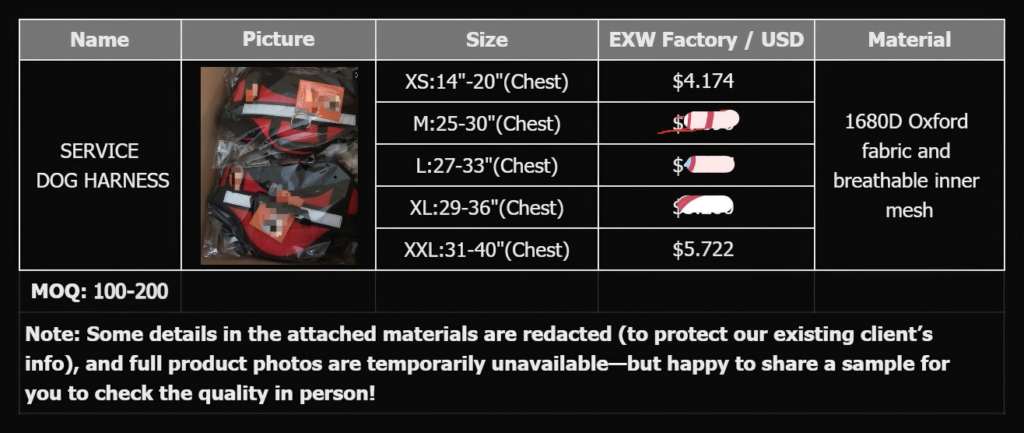
I once worked with a US client sourcing dog harnesses.
Based on his requirements and current material costs, my quote ranged from:
- $4.174 (XS) to $5.722 (XXL)
- Material: 1680D Oxford + breathable mesh
His response was direct:
“I found another supplier offering $2.35–$4.57. Why are you so expensive?”
My answer was simple:
👉 “Because the materials — and the construction — are not the same.”
The Reality Most Buyers Ignore
In any industry, there is always a “market floor price.”
This price exists for a reason. It covers:
- Raw materials
- Labor
- Basic operational costs
So when you see a quote:
Slightly below market
- Maybe thinner materials
- Maybe lower-grade components
- Maybe shortcuts in production
👉 Still possible — but with trade-offs.
30–50% below market
That’s no longer a pricing strategy.
👉 That’s a warning sign.
At that level, the supplier is not competing on efficiency —
they are operating outside the logic of real production.
And in many cases:
👉 They’re not selling products.
👉 They’re selling a trap.
A Simple Way to Think About It
One of the best comments I’ve seen on this topic put it clearly:
If something normally costs 100, a quote at 110 or 115 is understandable.
A negotiated deal at 92 might be reasonable.
But if you’re seeing 80 — that’s not a bargain. That’s a red flag.
You don’t need to know the exact costs.
👉 But you do need to understand the range of what’s realistic.
Because:
👉 No supplier can “trap” a buyer who understands the basics of pricing logic.
Why Buyers Still Fall Into This Trap
Because price is the easiest thing to compare.
It’s simple.
It’s visible.
It feels objective.
But what often gets ignored are the factors that actually determine success:
- Communication clarity
- Responsiveness
- Consistency
- Product reliability
- Delivery execution
👉 These are harder to measure —
but they’re what actually decide whether your business runs smoothly.
My Advice (From Experience)
1️⃣ Respect the Market Floor
If a deal feels like you’re “winning big”…
👉 You might actually be the one being targeted.
2️⃣ Compare Value, Not Just Price
A lower quote doesn’t mean a better deal.
👉 Ask yourself:
- What materials are being used?
- What’s being reduced to hit that price?
- What risk am I taking on?
3️⃣ Look for Signals, Not Promises
Before focusing on price, look at:
- How clearly the supplier communicates
- How fast they respond
- How consistent their information is
👉 These are often more reliable indicators than the quote itself.
Final Thought
In sourcing, the biggest mistake isn’t overpaying.
👉 It’s a misunderstanding of what you’re actually paying for.
Because sometimes:
The cheapest quote doesn’t reduce your cost —
it simply delays it.
And when it comes back…
👉 It’s usually much more expensive.