
A recent survey covering 2,708 pet owners across Australia, Brazil, Canada, France, Mexico, the UK, and the US highlights a clear pattern:
👉 Pet accessories have become a regular expense —
but purchasing behavior is increasingly shaped by budget pressure and channel preference.
Most pet owners buy accessories a few times per year, with spending typically falling into a mid-range level.
At the same time:
👉 Consumers are becoming more selective —
expecting safety, quality, and value in every purchase.
Core Categories: Toys Lead, While Functional Products Stay Essential
Across both dog and cat owners:
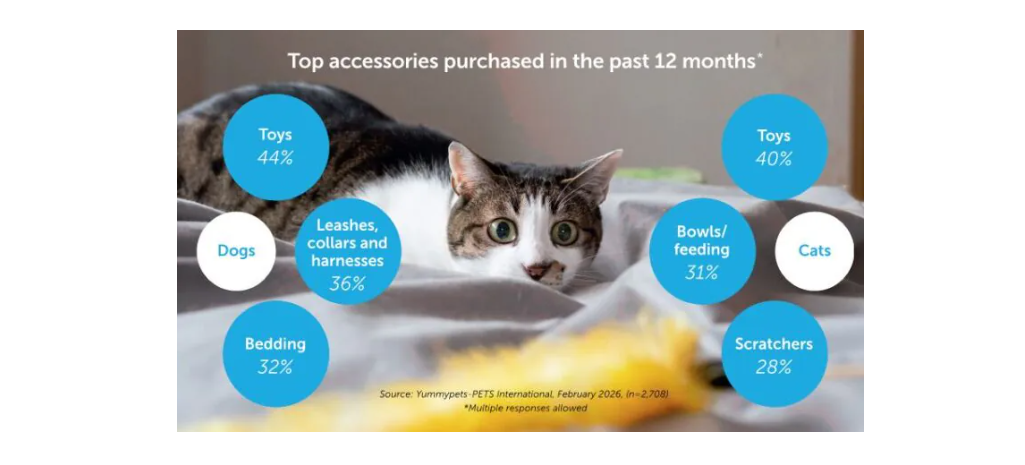
- Toys are the most purchased category
- Dogs: 44%
- Cats: 40%
For dog owners, functional categories remain highly relevant:
- Leashes, collars, and harnesses: 36%
- Higher in Mexico (45%) and Australia (43%)
Other key categories include:
- Bedding (blankets, beds): 32%
- Grooming products: 31%
- Particularly strong in Brazil (40%) and Mexico (39%)
👉 This highlights a consistent pattern:
Everyday functional products — especially harnesses, collars, and leashes — remain core purchasing drivers.
Cat Accessories: Strong Demand in Key Markets
Cat owners show different purchasing behavior:
- Bowls and feeding accessories: 31%
- Scratchers: 28%
- Grooming tools: 24%
The US stands out:
- Toys: 50%
- Scratchers: 36%
- Cat trees: 28%
- Bedding: 26%
👉 This indicates:
Higher engagement markets tend to drive broader category expansion.
Decision Drivers: Safety and Quality Come First — Price Still Matters
When choosing accessories, consumers prioritize:
- Pet safety: 72%
- Quality and durability: 71%
- Price: 60%
Regional sensitivity:
- Brazil: 65% price-sensitive
- Australia: 64%
- US & Canada: 63%
Lower priorities include:
- Design: 23%
- Reviews: 23%
- Sustainability: 17%
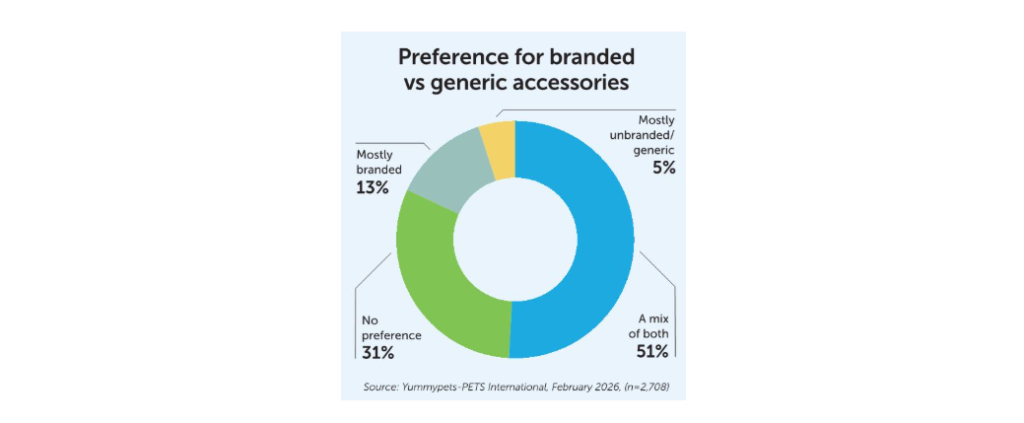
- Brand: 9%
👉 Key insight:
Consumers are not buying based on branding —
they are buying based on trust in performance and value.
Purchase Behavior: Occasional, but Not Irrelevant
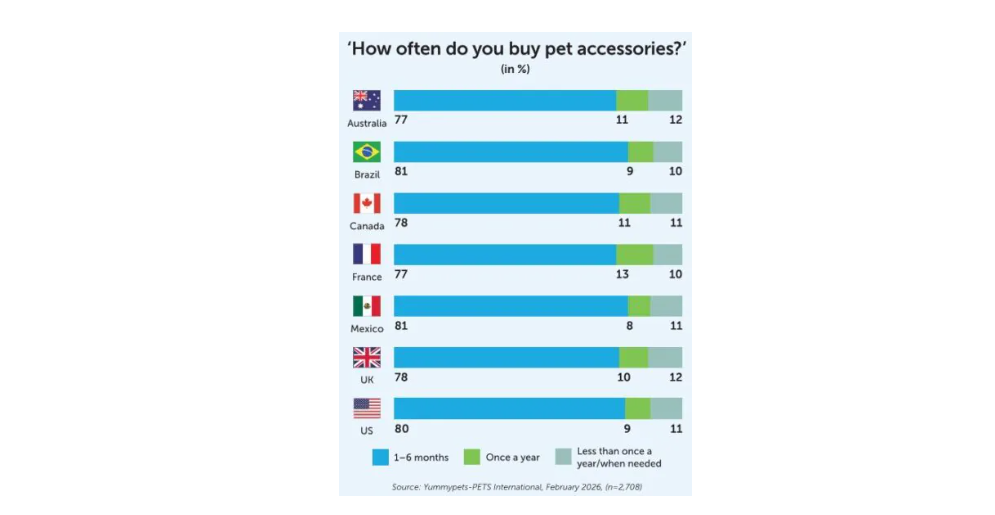
Accessories are not high-frequency purchases:
- 41% buy several times per year
- 38% buy more than once every three months
- 10% buy once per year
- 8% only replace when necessary
At the same time:
- 51% see accessories as an “occasional treat”
- 44% see them as a “needs-based purchase”
👉 This creates a dual nature:
Accessories are both functional essentials and emotional purchases.
Spending Patterns: Mid-Range Dominates, but Premium Is Growing
Annual spending:
- $30–$75: 35%
- $75–$150: 29%
- $150–$300: 14%
- $300+: 10%
- Below $30: 13%
👉 Important shift:
More consumers are moving toward higher spending tiers.
Budget allocation:
- 10–25% of pet budget: 49%
- Below 10%: 25%
- 26–50%: 17%
- Above 51%: 7%
Channels: Online Dominates — But Not Alone
Online marketplaces are now central:
- 66% of consumers buy from platforms like Amazon
- US: 85%, Mexico: 73%
👉 Amazon is becoming a core purchasing channel:
- 80% have bought from it
- 28% increased purchases in the past 12 months
Discount platforms (Temu, AliExpress, Shopee, Wish):
- Used by 30%
- Brazil: 55%
👉 This reflects:
Growing demand for low-cost alternatives.
Why Consumers Buy Online
Top reasons:
- Lower prices: 60%
- Convenience & delivery: 52%
- Promotions: 52%
- Wider assortment: 41%
👉 Price advantage remains the strongest driver.
Offline Still Matters
Despite online growth:
- Large pet chains: 54%
- Independent stores: 49%
- Supermarkets: 41%
👉 Physical retail still plays a key role —
especially for immediate and trust-based purchases.
Future Outlook: Stable, but Selective Growth
Looking ahead:
- 69% plan to maintain spending
- 19% plan to increase spending
- 5% plan to reduce spending
👉 Growth remains —
but not aggressive.
Final Insight
The pet accessories market is not shrinking —
👉 it is becoming more selective.
- Consumers still buy
- But they compare more
- And expect more value
👉 The challenge is no longer demand —
but conversion and positioning.
2️⃣ What This Means for the Pet Industry
The accessories category is evolving into a value-sensitive but stable segment:
- Demand exists, but is not high-frequency
- Price sensitivity is increasing
- Functional products remain core
- Online channels are becoming dominant
At the same time:
👉 Consumers expect more for every purchase.
3️⃣ What This Means for Pet Brands Working with OEM Partners
The Problem
Brands are facing:
- Increasing price sensitivity
- Slower purchase frequency
- High competition in similar products
- Pressure from low-cost online platforms
The Need
Brands now need:
- Better cost-performance products
- Clear differentiation in basic categories
- Flexible product development
- Faster response to market demand
Where OEM Partners Create Value
OEM partners help brands by:
- Offering cost-efficient production
- Supporting functional upgrades (e.g., harness, collar improvements)
- Enabling flexible SKU development
- Ensuring stable quality and supply
👉 In a price-sensitive market,
the right supplier directly impacts competitiveness.
Source: GlobalPETS