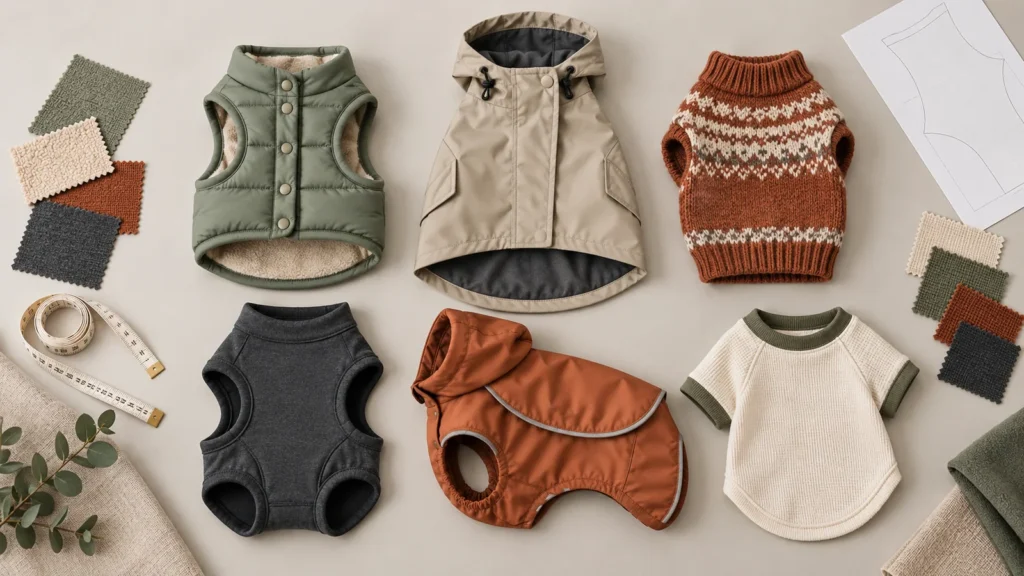
Choosing a pet clothing manufacturer starts with making the project understandable. Two quotations can describe similar garments while assuming different materials, measurements, decoration, packing or approval responsibilities. Those differences become harder to resolve after a sample has been approved or production has begun.
For pet brands, importers, distributors and private-label teams, a useful sourcing process connects each decision to a written reference. Define the application, establish measurable requirements, review samples, agree on production and acceptance conditions, then compare suppliers on the same scope. This guide explains what to prepare at each stage, including when an early idea still needs development.
Define Your Pet Clothing Project Before Requesting a Quote
Begin with a short project brief identifying the garment, intended use, destination market and sales channel. A distributor supplying stores may need assortment instructions; an online seller may need individual identification and receiving requirements. Explain these needs before requesting pricing.
Attach the references available to you and explain their purpose. A photo can communicate appearance while leaving fabric, inside construction and measurements unresolved. Mark the features you want to retain, the changes you want considered and the decisions requiring manufacturer input.
Include estimated order quantity, proposed sizes and colors, branding requirements, packing expectations and the desired delivery window. Label estimates clearly. Separate essential requirements from optional features so a manufacturer can identify feasible alternatives without quietly changing the brief.
Verde’s published product development workflow describes starting with a sample, photo, drawing, measurement chart or early idea, then reviewing materials, construction, sizing, branding and packing before sampling and bulk planning. The support available depends on the project review.
Assign one buyer contact to consolidate decisions. Identify who can approve design, commercial terms and final release, especially when those responsibilities sit with different people. A shared brief gives each reviewer the same starting point.
Translate the Application Into Material and Construction Requirements
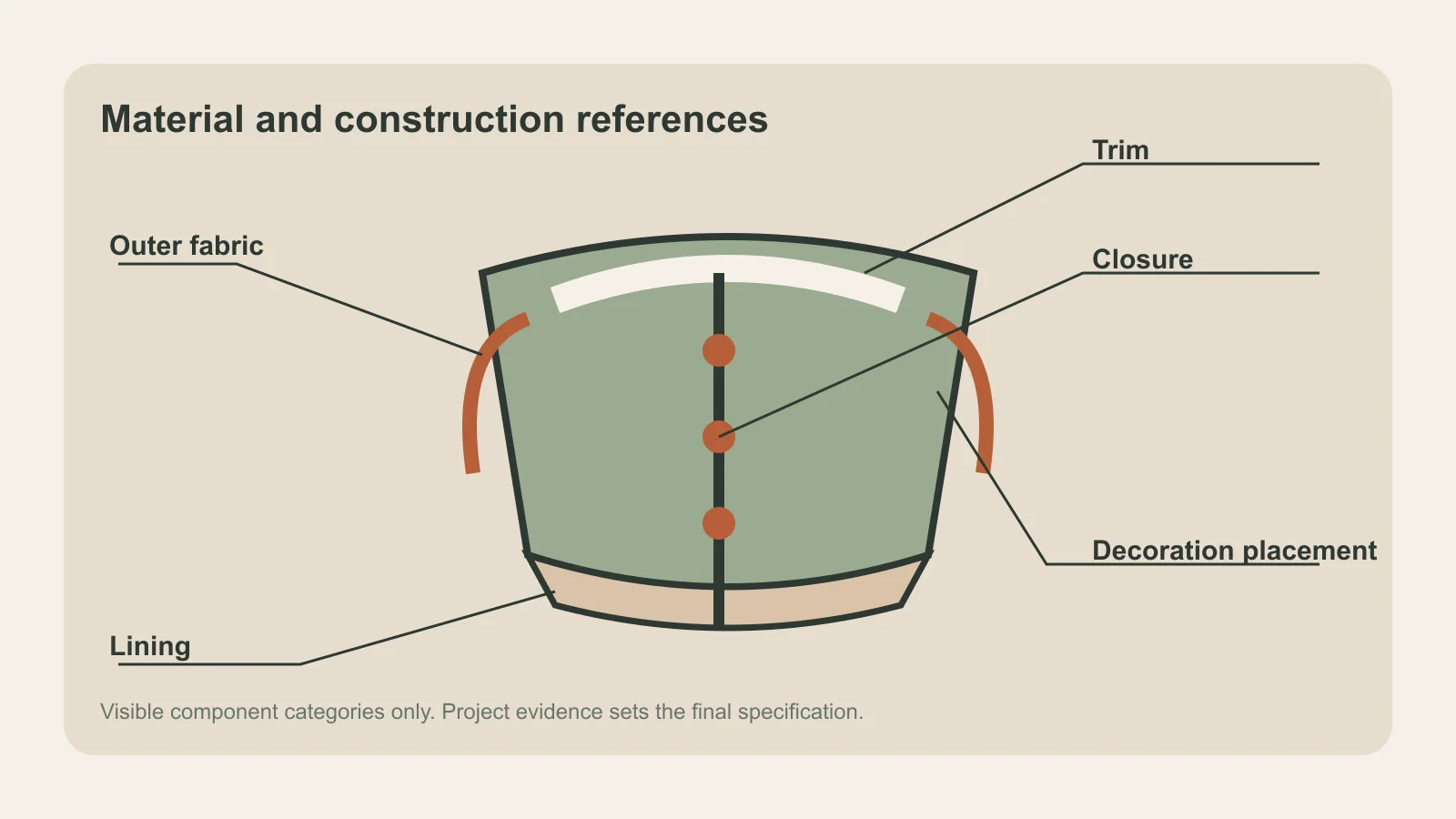
Compare materials against the proposed garment and its use. Record the attributes that matter, such as fabric composition, construction, weight, stretch direction, surface appearance and lining arrangement. Ask for identified swatches or material references so comments refer to a specific option. A fabric name alone cannot establish finished-product performance.
Build the specification around the whole garment:
- Identify outer fabric, lining and any additional layers, including their locations.
- Describe openings, closure type and placement, binding, elastic, trims and reinforcement areas.
- Provide artwork, decoration method, dimensions, placement and color references for printing, embroidery or labels.
- State intended care instructions as requirements needing verification for the selected materials, decoration and construction.
Record substitutions separately. If a proposed replacement changes appearance, stretch, assembly or care expectations, decide which parts of the sample review must be repeated before approval. Keep the accepted option identifiable in the specification.
For any intended performance claim, request evidence tied to the actual material and garment construction, with the applicable method and result. Leave unsupported claims out of product copy. Likewise, avoid broad, unqualified green or eco-friendly claims and substantiate specific environmental statements, consistent with the FTC Green Guides summary.
Use the material review to resolve trade-offs explicitly. If appearance, construction and the target cost cannot all be retained, ask the manufacturer to describe alternatives and their implications before choosing one.
Control Sizing and Fit With a Measurable Specification
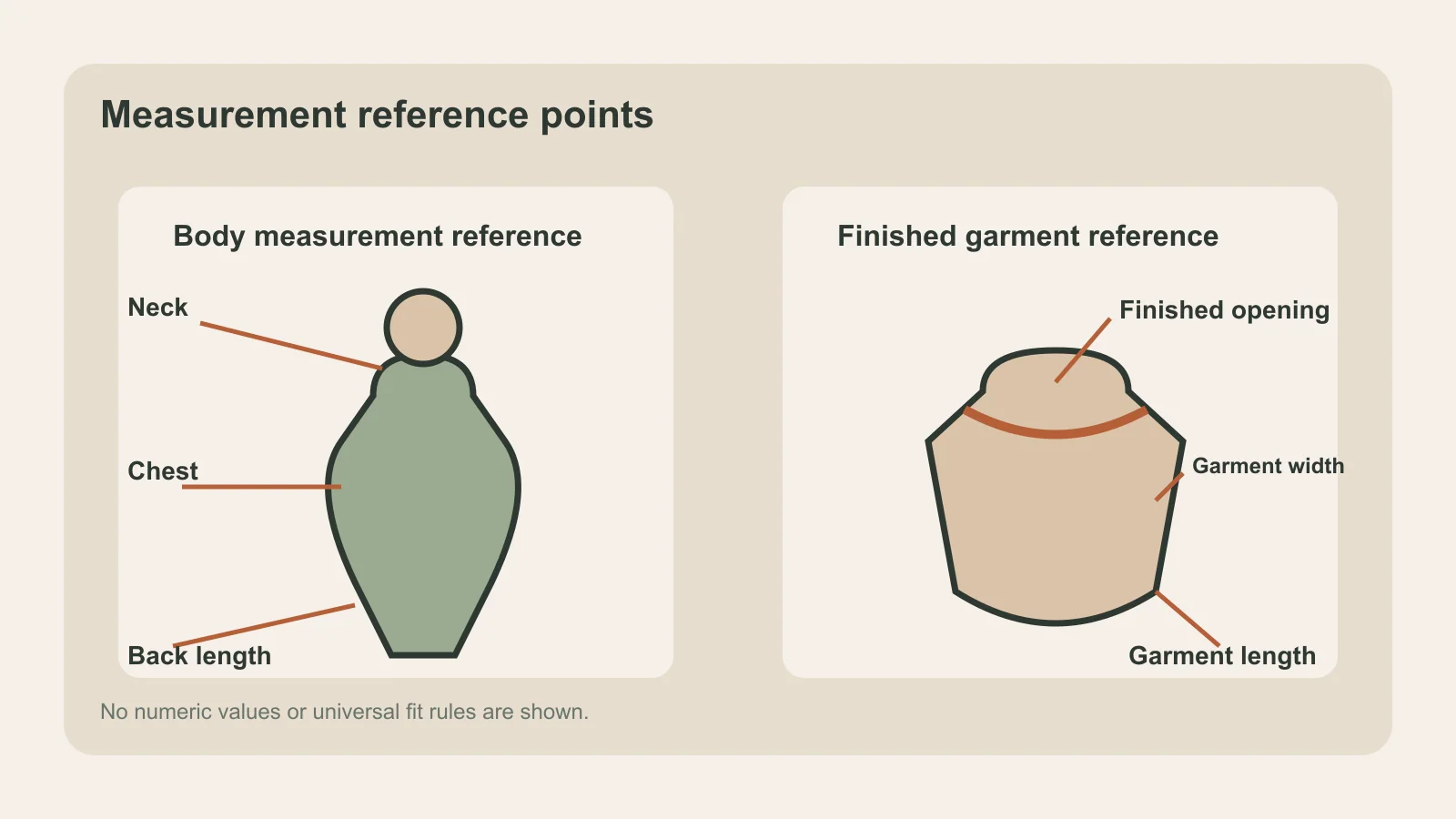
Body measurements describe the intended wearer. Finished-garment measurements describe the manufactured item under an agreed measuring method. Keep them in separate charts and identify how they relate to the proposed fit. Copying body dimensions directly into garment dimensions leaves the intended allowance and construction assumptions unexplained.
Define each point of measure using named start and end points and a diagram. Specify units, whether a value is a flat width or circumference, how the garment is positioned and whether closures are fastened. State any agreed treatment of stretch during measurement. This allows buyer and manufacturer readings to be compared meaningfully.
Choose a reference size, then document the intended changes between sizes. Grading describes those changes; tolerance describes the permitted variation around a specified measurement. Agree both for the project. Neither a universal increment nor a blanket tolerance should be assumed across every point or garment.
For cat and dog projects, establish differences through verified body measurements, garment patterns, opening positions and sample observations for the intended products. A species label alone cannot establish the required fit. Keep separate references wherever the evidence identifies a difference, and validate proposed sizes through the agreed sample review.
For product exploration, review cat clothing options or dog clothing options, then return to the selected garment’s measurement requirements. Category browsing does not replace a project size specification.
Evaluate Samples and Control Revisions
Before ordering a sample, agree what that sample is intended to confirm. Its scope may cover shape, measurements, construction, selected materials, decoration or packing. Record any temporary components or unrepresented features so approval cannot be mistaken for acceptance of something the buyer has not reviewed.
Inspect the sample against the current specification. Record measurements by point and size, compare construction and stitching with the agreed references, and check closure operation, component placement, color and branding. Review openings and intended fit using the agreed method. Include labels and packing when they form part of the sample scope.
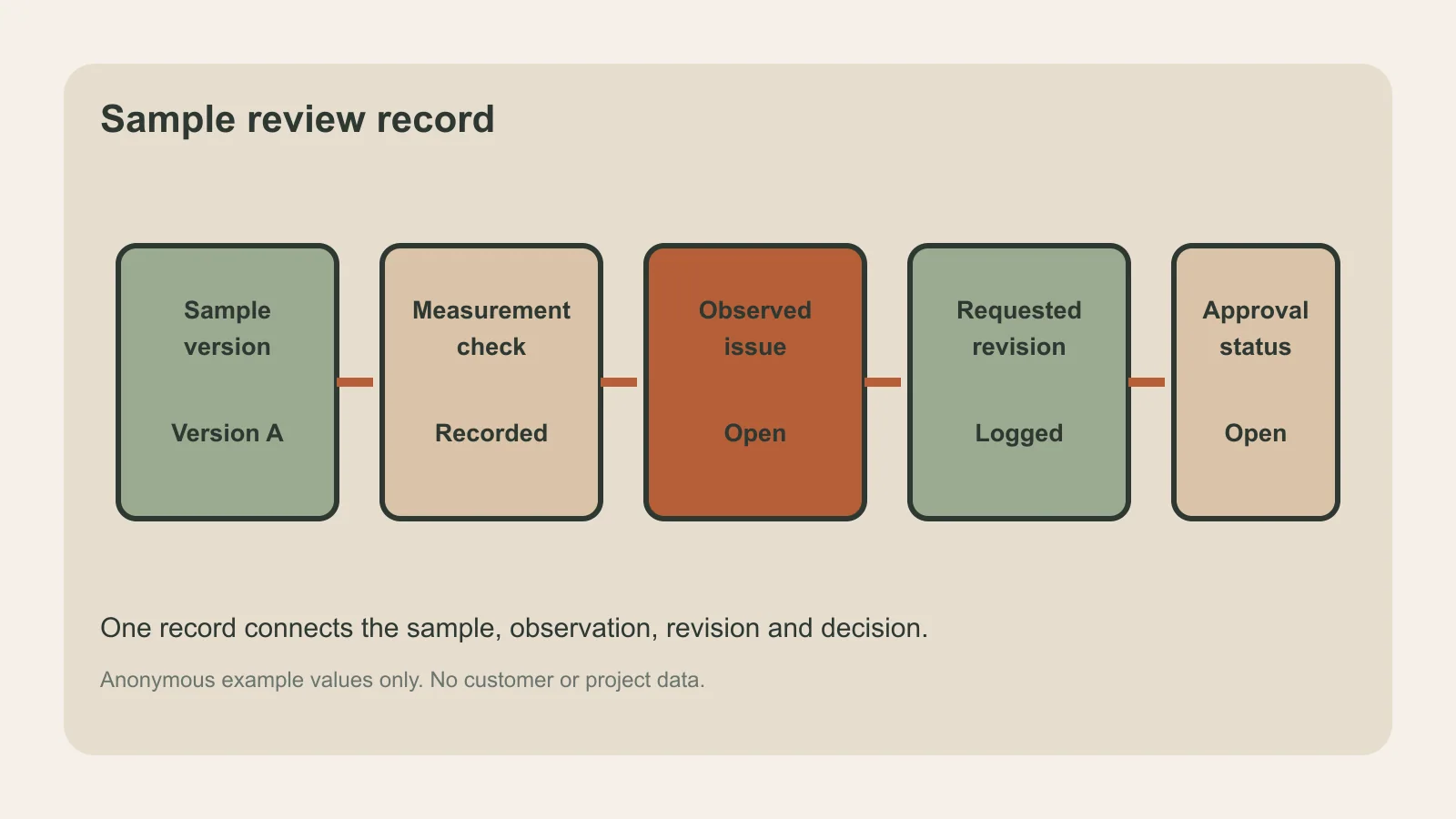
Make comments specific enough to act on. A useful revision entry identifies the sample version, location, observed issue, requested change, annotated image, responsible person and review status. Replace comments such as “improve fit” with the measurement or construction decision that needs resolution.
Consolidate feedback into one revision record and obtain acknowledgement of the changes. When the next sample arrives, check both the requested revisions and any areas they may affect. Close each item through an explicit decision.
An approved sample is a working reference. Bulk consistency still requires agreed controls and verification. State exactly which sample and specification versions are approved, what remains open and whether approval permits further development or production release. Any unresolved item affecting bulk output needs a documented decision before release.
Confirm Production Readiness and Commercial Assumptions
Create a production-release record that brings the approvals together. Identify the final specification and sample, selected materials and components, size and color mix, artwork, labels, packing instructions and agreed quality checks. Confirm who has authority to release the order and whether every required approval is complete.
Keep the production discussion connected to these decisions. Material preparation needs confirmed references; cutting and sewing need approved measurements and construction; component assembly and finishing need placement and appearance instructions; packing needs unit and assortment details. Ask the manufacturer to confirm the sequence applicable to the project and the information needed at each stage.
MOQ, price and lead time require a project-specific quotation. Relevant variables can include material availability and ordering conditions, the number of sizes and colors, custom components, decoration, construction complexity, sample revisions and packing scope. Ask which assumptions affect the offer and which changes would require a new quotation.
Clarify the timing basis as well. Record dependencies such as material confirmation, artwork approval and completion of sample revisions, alongside the delivery requirement. An indicative schedule needs its assumptions stated before it can support a purchasing decision.
For changes after release, agree who assesses the effect on cost, timing and approved references, and who authorizes implementation. Keep the previous and revised versions identifiable so the manufacturer receives one clear instruction.
Define Quality-Control and Acceptance Criteria
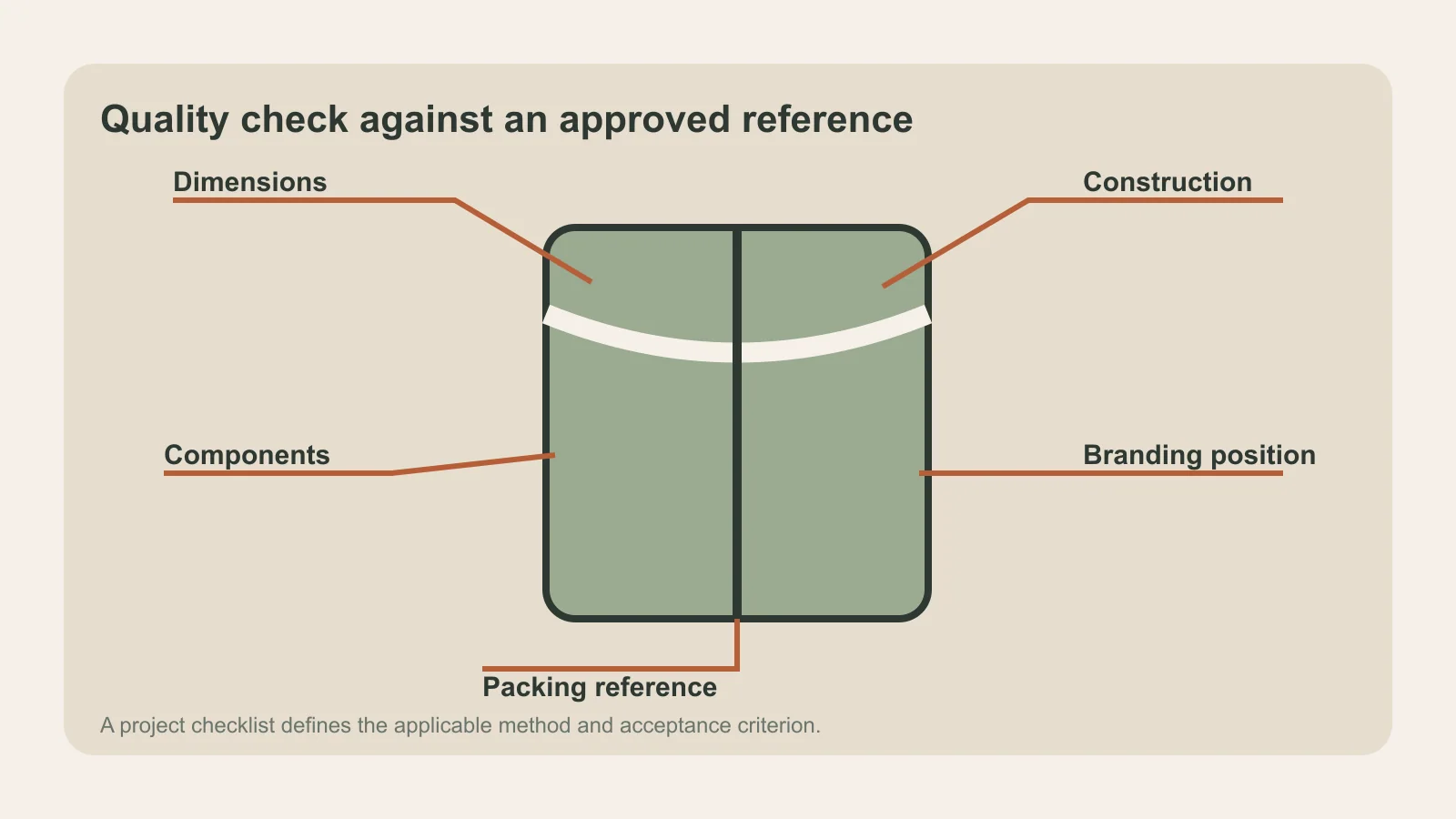
Turn expectations into checkpoints before bulk inspection. For each check, identify the reference, method, acceptance criterion and responsible reviewer. Pet clothing quality control becomes actionable when a result can be compared with an agreed requirement.
The checklist should cover finished dimensions by the agreed measurement points; construction and stitching details; component type, placement and operation; artwork and branding position; and label and packing accuracy. Include the size and color assortment, individual identification and carton contents where relevant. Use approved photographs or diagrams to clarify appearance requirements that words leave ambiguous.
Agree the inspection scope, timing and selection approach with the parties responsible. Specify what the inspection can establish and which additional evidence is needed for any requirement it cannot assess. A visual check alone cannot substantiate an unverified material-performance claim.
Define defect handling before a disagreement occurs. Record how findings will be described, who reviews exceptions and what happens when an item falls outside the agreed criteria. The response may require correction, rework, reinspection or a buyer decision on disposition. Confirm who can authorize release after an issue is resolved and how the outcome will be recorded.
Keep the approved specification, sample and revision record identifiable and aligned. Traceability in this guide means that narrow connection among those references. It provides a basis for checking what was agreed while leaving each inspection result to be evaluated on its own evidence.
Prepare Labels and Packing for the Target Market
Start with product, material, proposed claim, destination market and sales channel, then obtain qualified compliance review. Confirm which fibre, care, origin, identity and language requirements apply before approving artwork. Requirements for human clothing cannot simply be carried over to every pet garment.
For the United States, FTC textile and wool guidance explicitly lists dog coats, other pet clothing and pet furniture among products outside Textile Act labeling requirements. This does not settle all obligations. Wool-containing products, care-label rules and other applicability questions require product-specific review; the exclusion should not be treated as a general exemption from all labeling law.
Official EU guidance describes the framework for products containing at least 80% textile fibres by weight, including consumer-facing textile labeling obligations and commercial-document treatment in business-to-business supply. Those are related but distinct contexts under Regulation (EU) No 1007/2011. Applicability depends on the defined product, the transaction stage and destination-market rules. Treatment through commercial documents in a business-to-business transaction should not be read as universally replacing consumer-facing labeling duties. This guide does not provide universal legal advice; obtain qualified review before applying the framework to a pet garment.
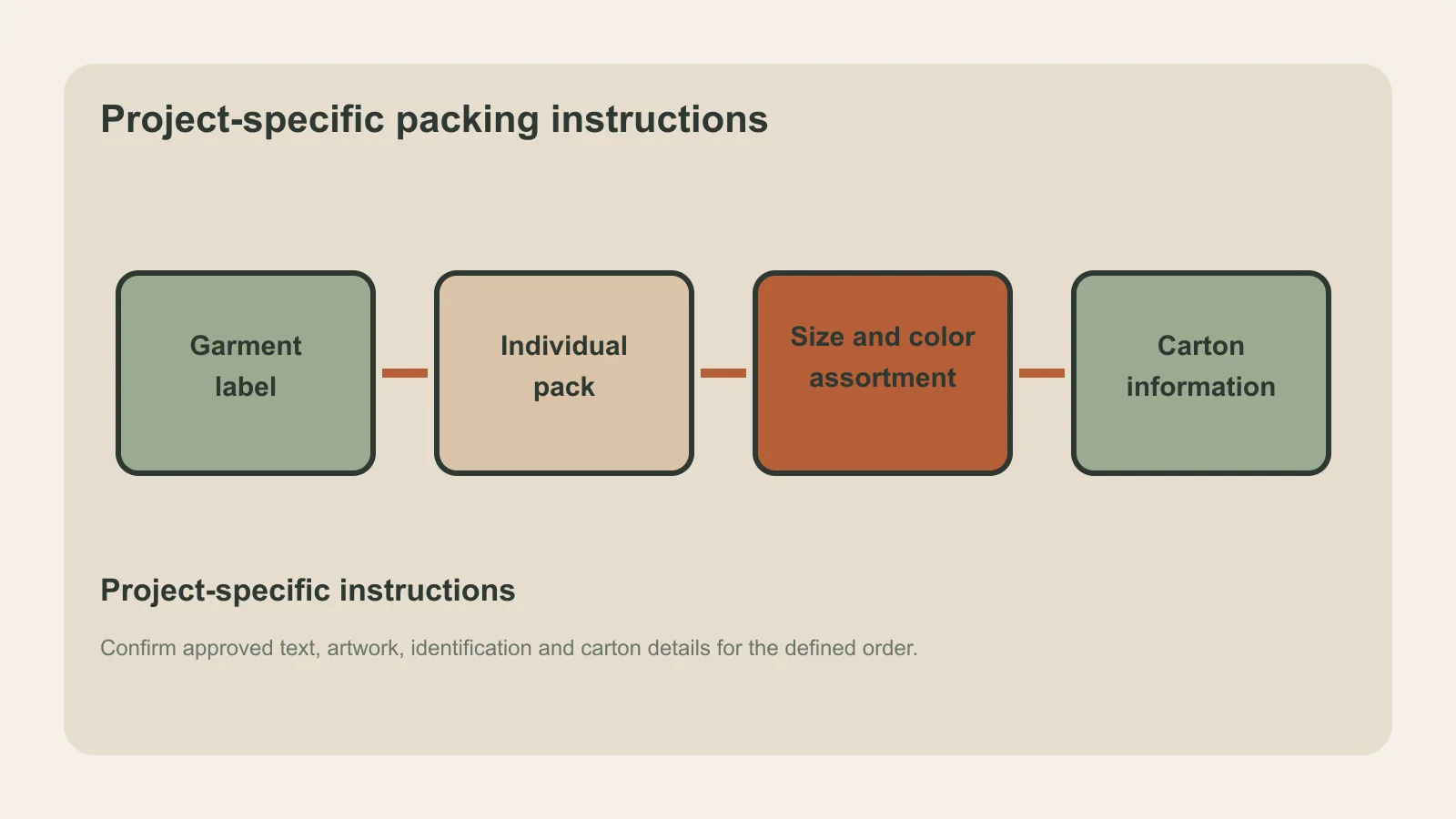
Separately, document the buyer’s operational packing requirements. Specify approved label text and placement, barcode data and artwork, individual packing, size and color identification, assortment quantities and carton markings. Keep legal requirements and channel instructions distinguishable in the approval record.
Review the pack layout against the order’s size and color matrix. Assign responsibility for artwork, data accuracy and final approval before labels or packing materials are produced.
Build a Comparable RFQ and Evaluate Manufacturers
Bring the decisions into one request for quotation. Include the project brief, references, material and construction requirements, measurement chart, quantity and size mix, artwork, sample expectations, quality criteria, packing instructions, target market and timing assumptions. List unresolved decisions and the input requested from the manufacturer. An early inquiry can use partial specifications if those gaps are visible.
Ask suppliers to quote against the same revision and identify exclusions or substitutions. Compare unit price alongside included development work, samples, decoration, packing and any separately quoted services. Confirm quantity conditions, timing dependencies and commercial terms directly. A price difference becomes useful only after its scope is understood.
When evaluating OEM or ODM support, ask who develops the design and pattern, who selects materials, who owns the working files, what may be modified and who approves revisions. These labels alone do not define the service. Verde’s support requires project-specific review, including feasibility and responsibility boundaries.
Assess manufacturer responses for clarity. Look for acknowledged specification versions, explicit assumptions, consolidated sample comments and a clear process for raising exceptions. Ask how the approved specification, sample and revision record will be retained for the order. Compare pet clothing manufacturers through these controls alongside price and the proposed scope of work.
Prepare your available sample, photo, drawing, measurement chart or specification, plus target quantity, market and unresolved development questions. Discuss your pet clothing project with Verde Pets to establish what needs review before quotation and sampling.